
Turn the Louvres
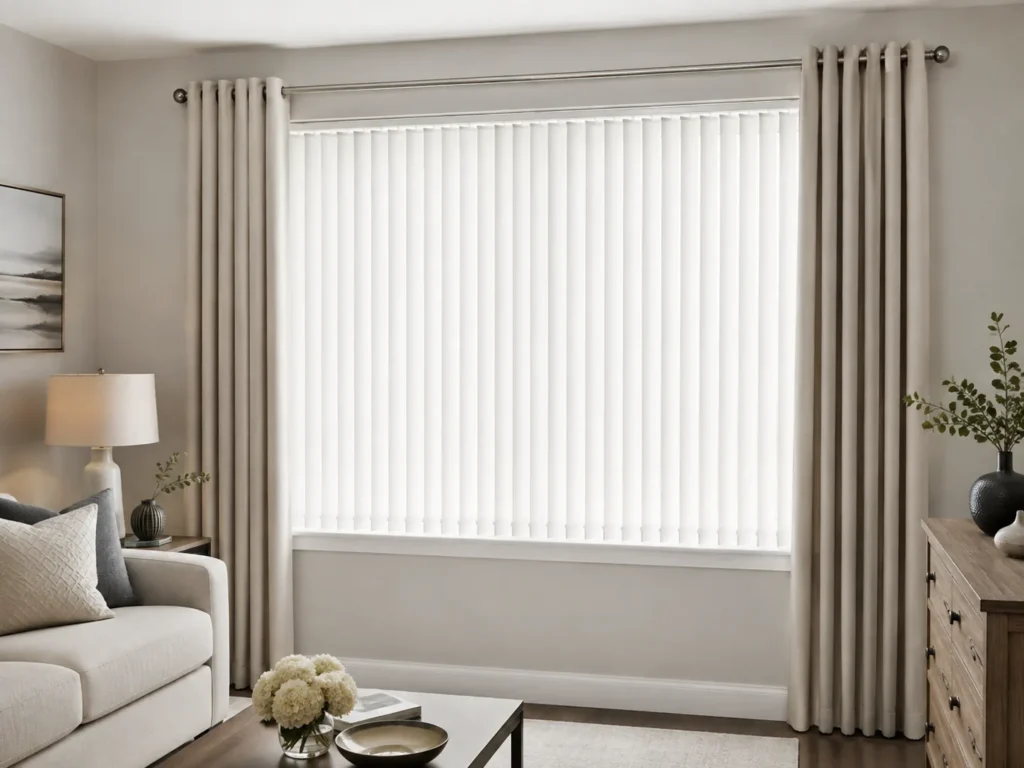
Angle the louvres to alter how much daylight enters and how directly someone can see through the window.
Made-to-Measure Vertical Blinds
Made-to-measure Vertical Blinds offer adjustable privacy and daylight control across everyday windows, wide glazing and suitable doors, with practical advice, professional measuring, a quotation and fitting across West Yorkshire.
Tell us about your window, door or room and we can arrange a home appointment to discuss suitable options.
A Flexible Blind Style
Vertical Blinds use individual fabric louvres that hang vertically and can be turned to change privacy and daylight or moved aside when you want to uncover the glazing.
Unlike a blind that simply raises and lowers, the louvres can remain across the window while being angled. This gives useful control over light, outside view and privacy, particularly on larger windows, wide glazing, suitable doors and selected specialist openings.
Simple Everyday Control
The design gives you two useful forms of control: the louvres can change angle while covering the opening, and the blind can move aside when you want clearer access or views.
Angle the louvres to alter how much daylight enters and how directly someone can see through the window.
Bring the louvres into a more closed position when stronger screening is needed, particularly as outside light falls.
Open the blind sideways when you want to uncover more of the glazing or make access through a suitable door easier.
Change the position as sunlight, glare, privacy and room use change rather than relying on one fixed setting.
Everyday Advantages
Their strongest benefits come from flexibility. Vertical Blinds can respond to changing daylight, privacy and access needs while remaining practical across many larger windows and glazed openings.
Turn the louvres gradually to soften strong daylight without automatically closing the room off from natural light.
Alter the angle to reduce direct views into the room while retaining more daylight than a completely closed blind may allow.
Redirect or soften bright light around televisions, computer screens, dining areas and seating without unnecessarily darkening the whole room.
The vertical format can work particularly well across wide windows and larger glazed areas where flexible coverage is important.
On suitable glazed doors, moving the blind sideways can keep access more practical than a covering that occupies the doorway differently.
Plain, patterned and textured fabrics make it possible to choose an understated look or give the window more decorative presence.
Choose the Finished Look
Begin with the look you want from the window, then consider the practical level of light control and privacy you need. The aim is a combination that works visually and in everyday use.
Understated
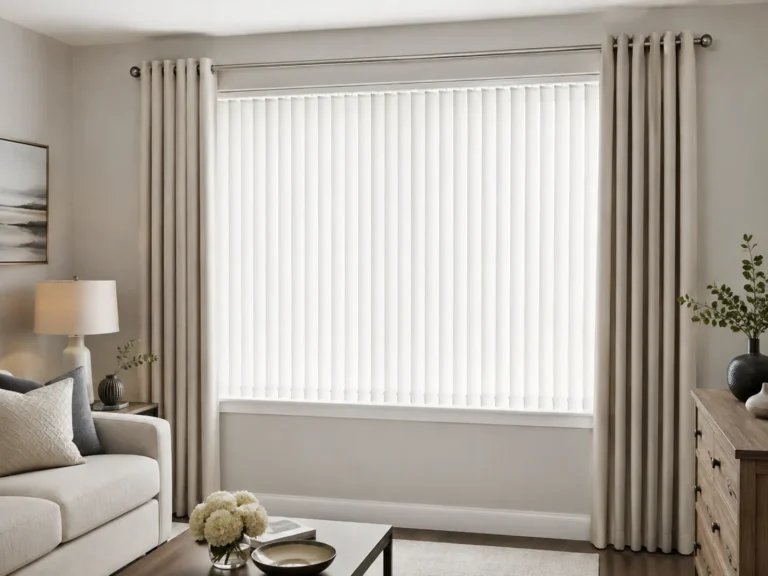
Soft neutrals, greys, creams and understated colours can help the blind sit quietly within the room rather than dominate the window.
Decorative
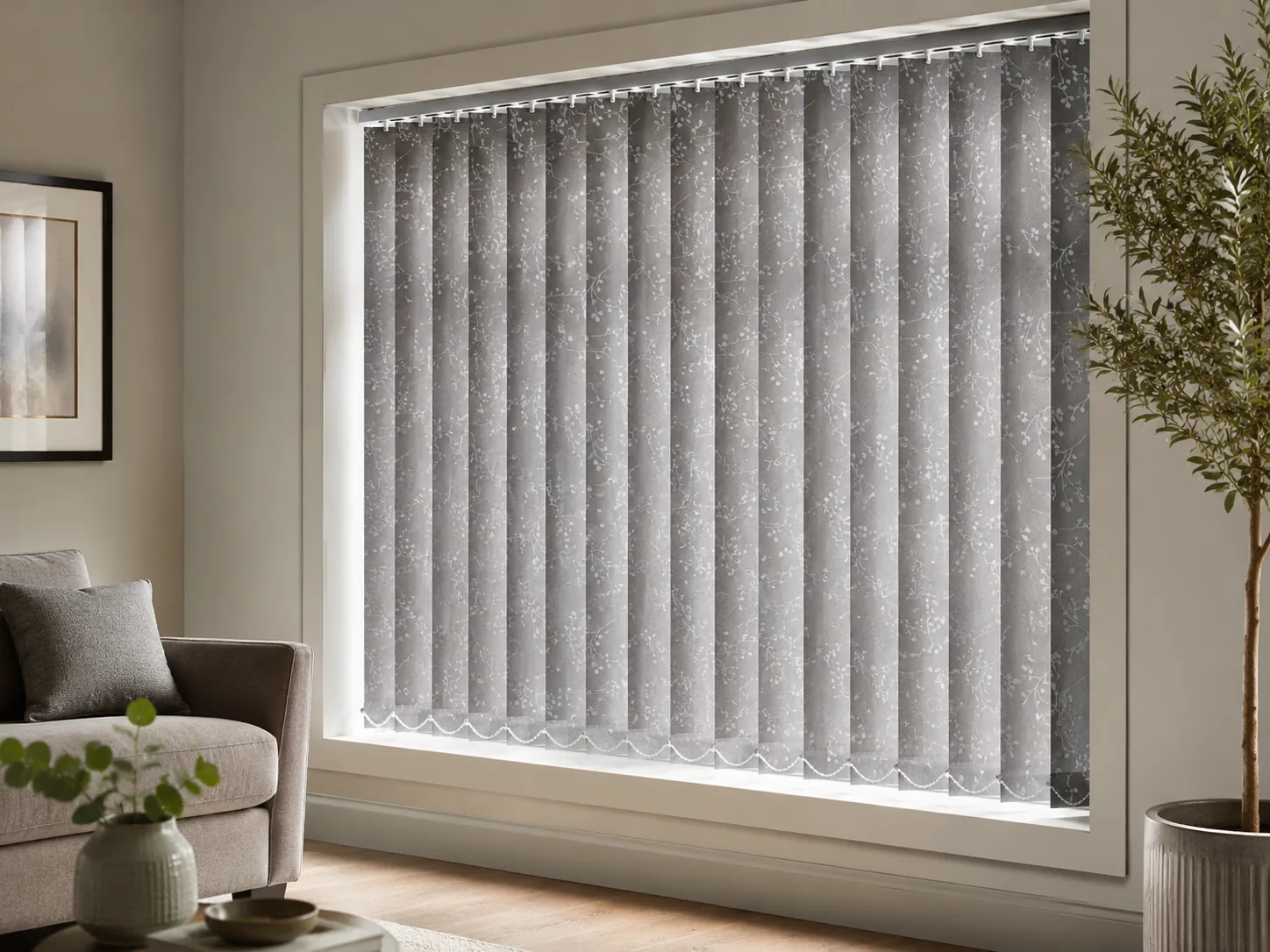
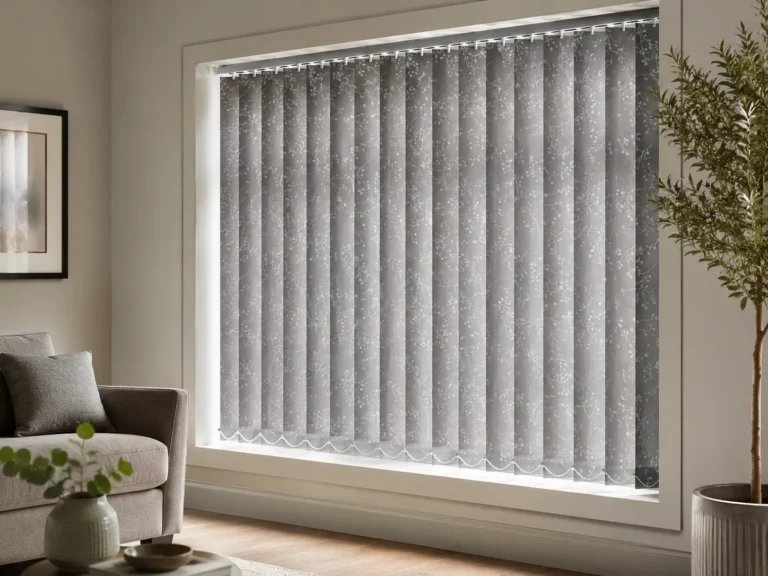
Pattern can add more character to a large window and help the blind contribute to the decorative scheme when the glazing is prominent.
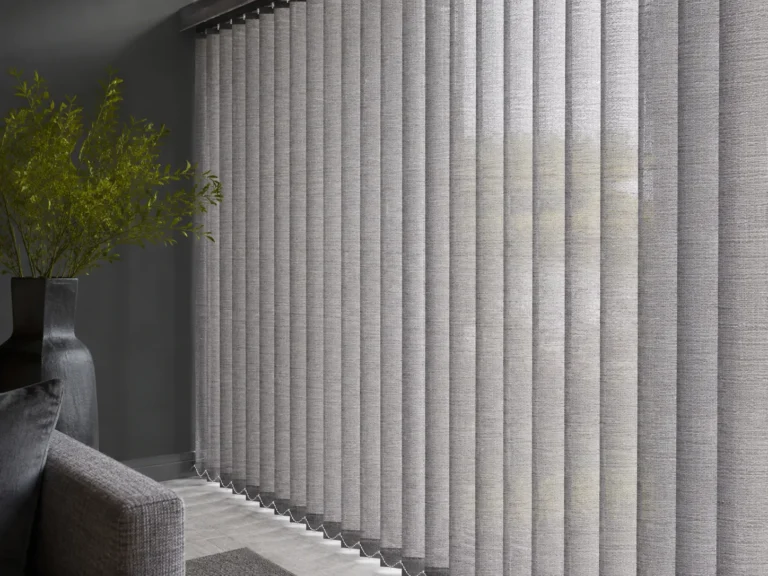
Tactile
Subtle textures can add depth and visual interest while keeping the overall finish restrained and suitable for a broad range of interiors.
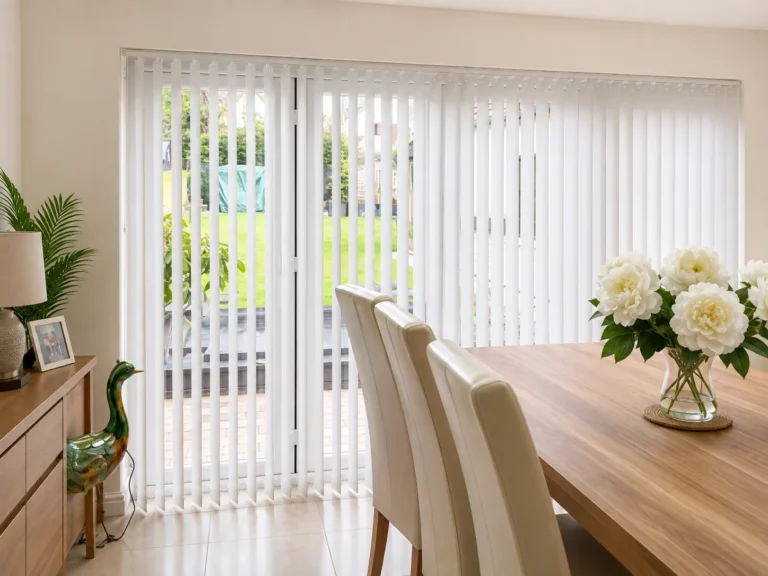
Practical
Your chosen look can also reflect whether you prefer a lighter daytime feel, Dimout performance or stronger Blackout light reduction.
Control the Room Environment
The ability to alter the louvre angle lets you respond to changing conditions instead of choosing only between a completely open or closed window covering.
Privacy
Partly turning the louvres can interrupt direct sightlines from outside while allowing useful natural light to remain.
After Dark
When lights are on indoors, closing the louvres more fully can provide stronger screening from outside.
Natural Light
Open the louvres further when you want a brighter room or a clearer outward view.
Comfort
Adjust the angle to reduce direct sunlight around screens, seating and working areas without unnecessarily darkening the whole room.
Light-Reduction Choices
Both options reduce incoming light, but they suit different priorities. Choosing between them is mainly about how much light reduction you want and how the room is normally used.
01 · Dimout
Dimout Vertical Blinds reduce brightness and glare while usually leaving a softer level of ambient light in the room.
02 · Blackout
Blackout Vertical Blinds use opaque material where stronger light reduction is important, such as bedrooms or spaces where bright daylight can be distracting.
03 · Privacy
An opaque fabric can improve screening, but privacy also depends on how fully the louvres are closed and the relative lighting inside and outside.
04 · Expectations
Blackout describes the fabric. Light can still enter around the edges or between parts of the finished blind, so complete darkness should not be assumed.
Around the Home
Their adjustable louvres make Vertical Blinds particularly useful where privacy, changing daylight or larger areas of glazing need to be managed throughout the day.
Flexible louvre positioning helps balance daylight, outside views and privacy on prominent living-room windows.
Dimout or Blackout options can provide stronger light reduction while the adjustable louvres remain useful during daytime use.
Adjustable light can help reduce direct glare on screens while allowing more daylight into the room when conditions permit.
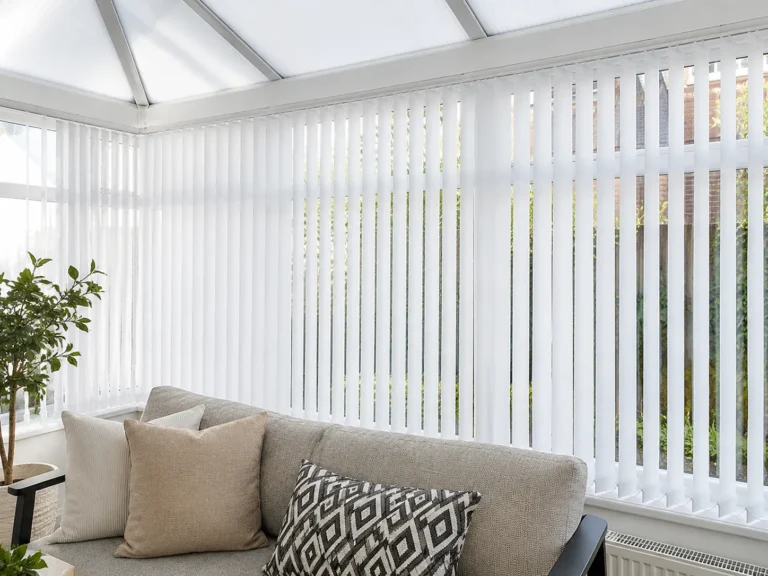
Vertical Blinds can be considered where multiple glazed sections need flexible privacy and light control, subject to the actual opening.
Vertical Blinds for wide windows can provide flexible coverage, adjustable privacy and useful daylight control across larger glazing. On suitable patio or sliding doors, the blind can also move sideways when access is needed.
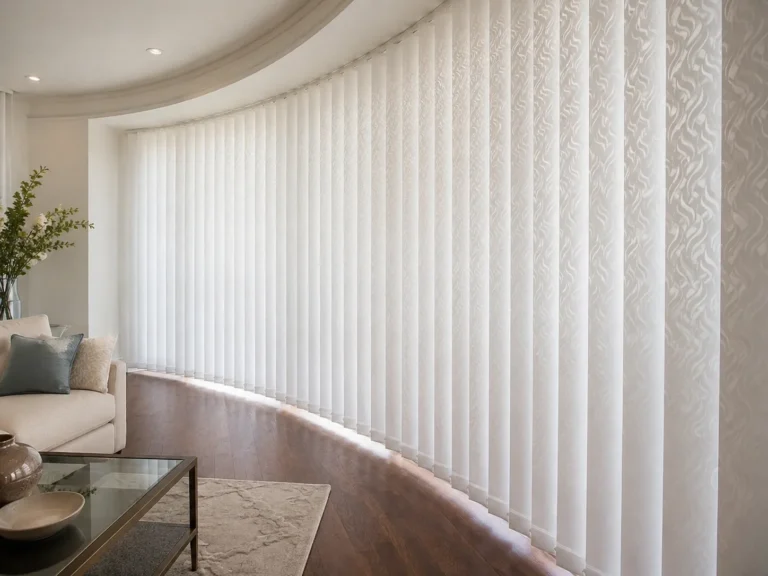
Sloping Vertical Blinds can provide a practical made-to-measure solution for certain angled and specialist openings. The actual shape, coverage and everyday operation need to be considered individually before a suitable solution is recommended.
Plan for Daily Use
A Vertical blind also needs to work comfortably around the opening. Access, surrounding furniture and the way the louvres gather can all affect the most practical arrangement.
01 · Access
Where a door is opened regularly, the blind should be planned so everyday entry and exit remain straightforward.
02 · Stack
Think about where the blind sits when opened so the gathered louvres do not unnecessarily obstruct the most useful part of the glazing.
03 · Surroundings
Window handles, locks, furniture and other nearby features should remain easy to use without repeatedly catching or interfering with the blind.
04 · Position
The appropriate position depends on the window or door and how it is used rather than one arrangement being right for every home.
Choose How You Operate Them
Both approaches can be practical. The more useful choice depends on reach, the size and use of the opening, how often the blind is adjusted and the level of convenience you prefer.
Manual controls can be a simple choice where the blind is easy to reach and regular adjustment by hand is convenient.
Motorised Vertical Blinds can make everyday adjustment easier where a powered system is available and appropriate for the selected installation.
Powered operation may be worth considering where larger blinds are adjusted regularly and easier control would be beneficial.
Motorisation can also be useful where normal manual operation would be less convenient because of the position of the glazing.
If the louvres are likely to be changed several times during the day, think about which operating method will feel easiest to use consistently.
The right control should suit the people using the room and the way the window or door functions rather than adding complexity that is not needed.
Safe Everyday Operation
The operating method should be practical for the opening and appropriate for the household, particularly where young children use the room.
Compare the available operating choices with the window position, reach and everyday routine in mind.
Where cords or chains form part of the selected system, they should be installed and managed with child safety in mind.
Appropriate control positioning and relevant safety measures should form part of the finished installation rather than being considered afterwards.
Narrow Down Your Choice
Begin with what you want the blind to achieve. Privacy, light reduction, access, the shape of the opening and ease of operation are more useful starting points than choosing fabric alone.
For bright rooms, compare flexible louvre control with the level of Dimout or Blackout light reduction you want. For larger, frequently used or unusual openings, prioritise access, shape and everyday operation before finalising the finish.
More Blind Styles
Vertical Blinds are only one way to manage privacy and daylight. These alternatives offer different looks and ways of operating, depending on your windows and priorities.
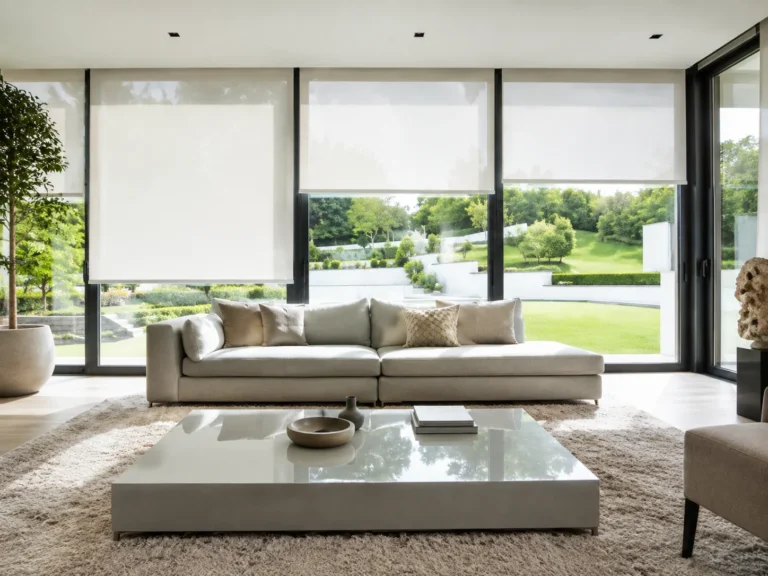
A clean fabric blind with simple up-and-down operation, available in a broad choice of colours and light-control options.
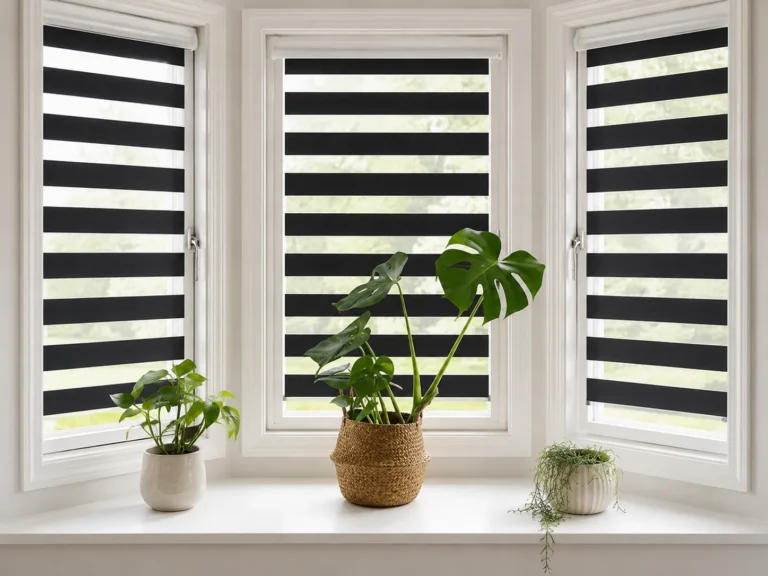
Alternating translucent and opaque fabric bands provide a contemporary way to adjust privacy, daylight and view-through.
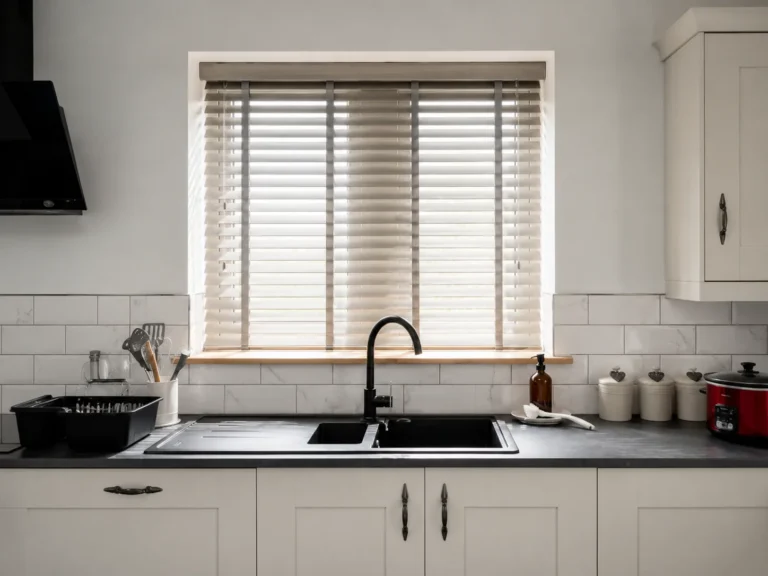
Horizontal adjustable slats provide precise directional control over daylight and privacy in aluminium, wood-related and faux-wood styles.
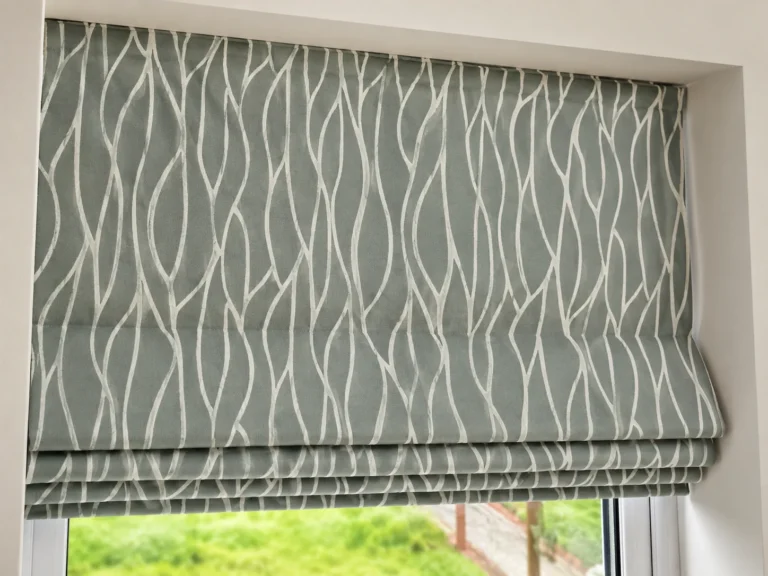
Soft fabric folds create a more decorative, furnished look for bedrooms, living rooms and other suitable interior spaces.
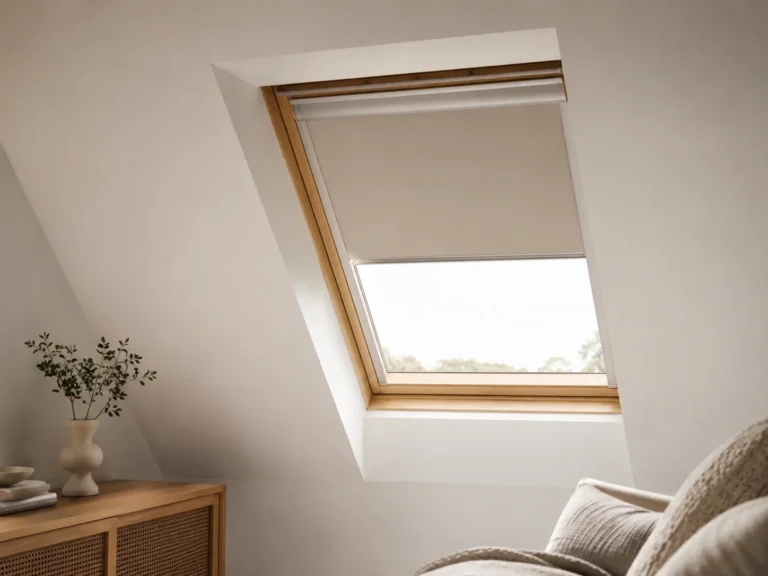
Purpose-specific blind solutions for compatible VELUX roof windows, including different light-control and operating choices.
More Ways to Cover Your Windows
Some windows and doors benefit from a more specialist approach. Explore these options where the opening, fitting style or particular use matters more than choosing a standard window blind.
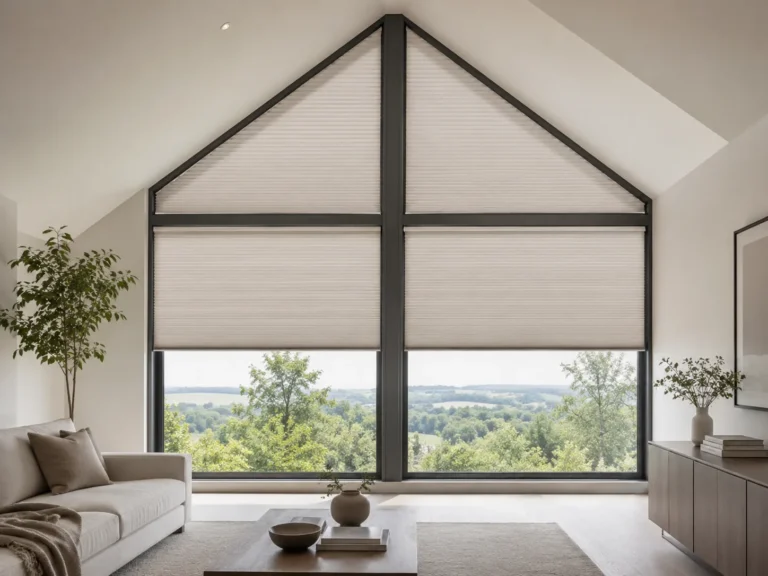
Compact Fabric
A neat fabric option with a compact appearance, including choices for standard windows and selected specialist applications.
Explore Pleated Blinds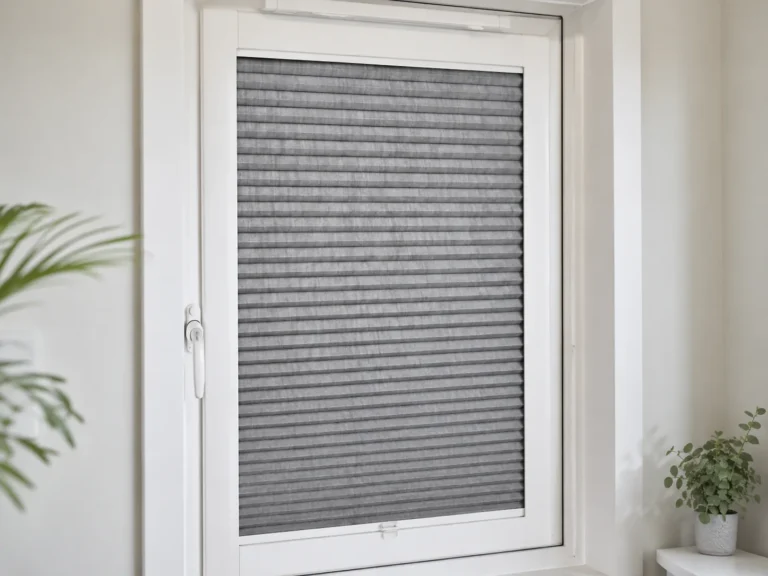
Integrated Fit
Integrated blind options for compatible window and door frames where a neat, close-fitting appearance is important.
Explore Perfect Fit Blinds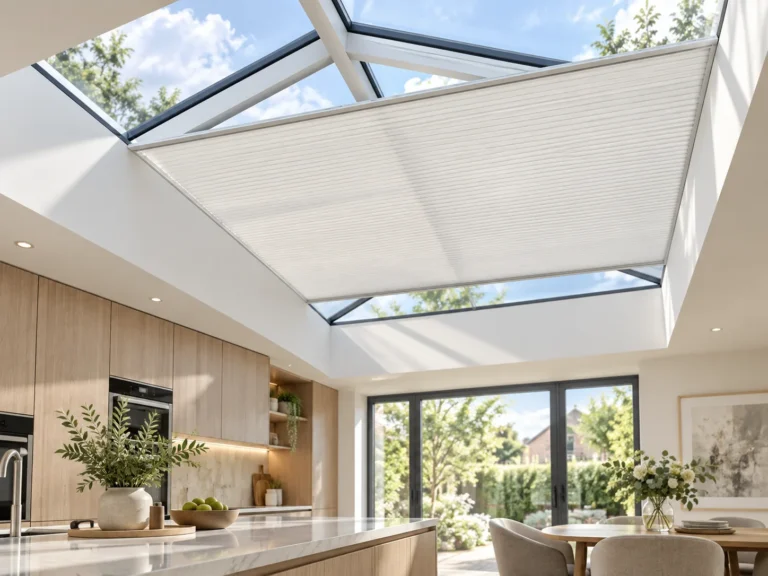
Overhead Glazing
Specialist shading solutions designed around large glazed roof lanterns where overhead daylight and access require a dedicated approach.
Explore Roof Lantern Blinds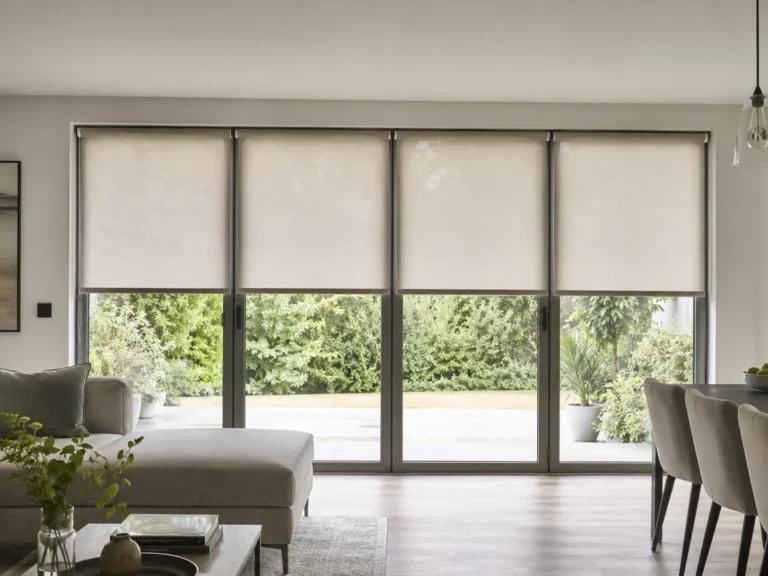
Sliding Doors
Compare blind options specifically around sliding or patio-door movement, wide glazing, privacy and regular access.
Explore Patio Door Blinds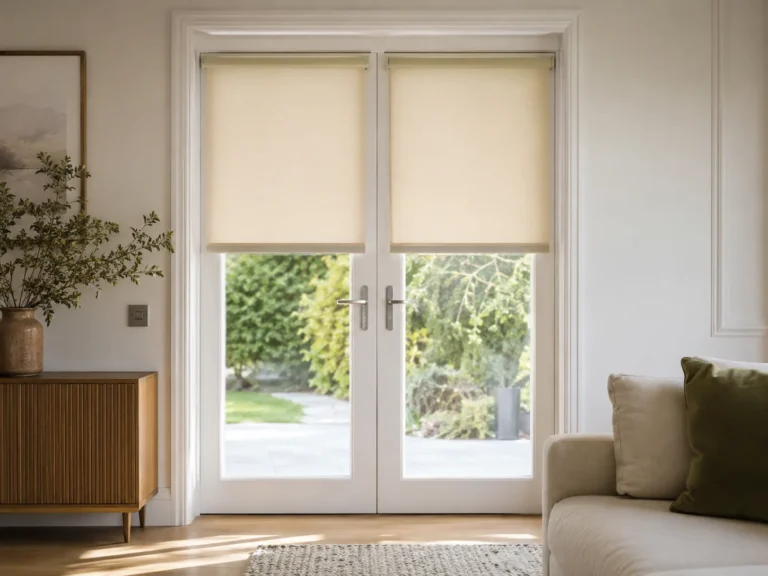
Paired Doors
Consider solutions around paired glazed doors, handles and everyday door movement without overlooking practical access.
Explore French Door Blinds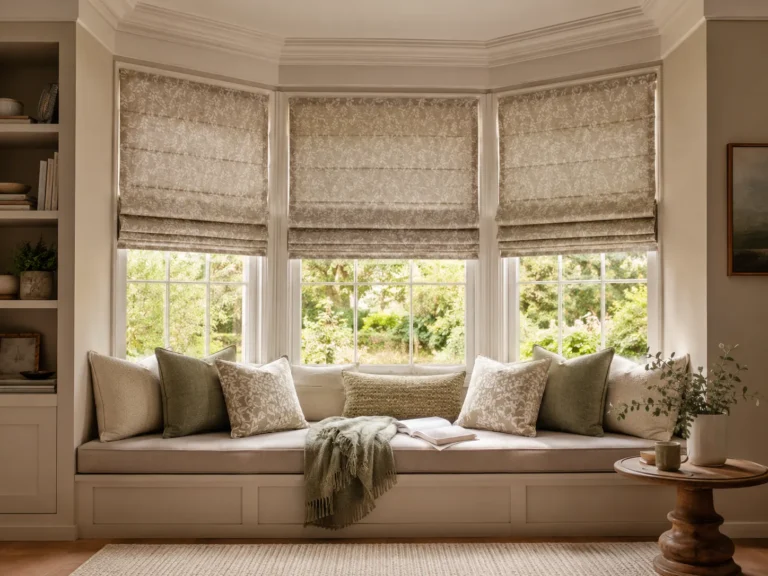
Angled Windows
Explore options that can work with the angles and multiple sections found across different bay-window arrangements.
Explore Bay Window Blinds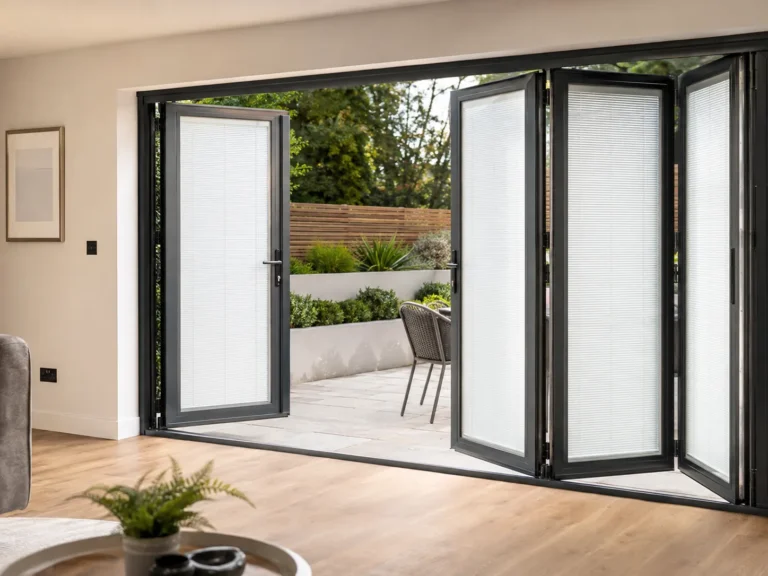
Folding Doors
Compare blind styles around folding door panels, opening movement and the need to keep the doorway practical.
Explore Bi-fold Door Blinds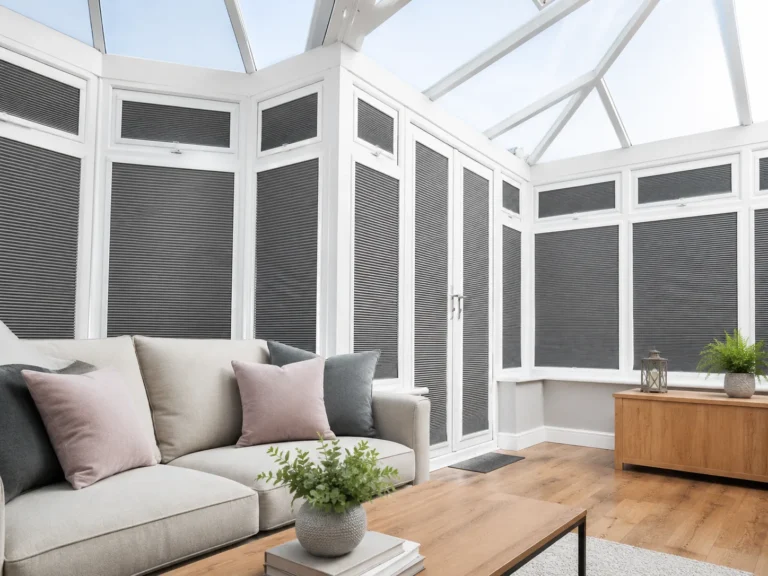
Glazed Rooms
Explore suitable blind types for conservatory windows, doors and larger areas of surrounding glazing.
Explore Conservatory BlindsStraightforward Everyday Care
Regular light care can help the louvres stay tidy. The safest cleaning method should always reflect the actual fabric or finish chosen.
Routine Care
Regular gentle dusting can prevent everyday build-up and help individual louvres retain a clean, even appearance.
Small Marks
Deal with small marks using a method suitable for the selected material rather than assuming every Vertical blind fabric can be cleaned in the same way.
Alignment
Use the controls normally and avoid forcing the louvres when turning or moving the blind so they continue to hang neatly.
Before Cleaning
Before using stronger products or more intensive cleaning methods, check that they are appropriate for the particular fabric or finish.
Help From Choice to Fitting
Noble Blinds helps you move from an initial idea to a professionally fitted blind without needing to work out every product detail yourself.
Discuss the room, opening and what you want from the blind in the place where it will actually be used.
The relevant window, door or opening can be professionally measured before the final made-to-measure solution is ordered.
Receive a quotation for the agreed blind choice after the practical requirements and preferred options have been considered.
Your selected blind is supplied to suit the agreed opening and chosen product configuration rather than as a standard off-the-shelf size.
Noble Blinds professionally installs the products it supplies and checks the finished operation as part of the fitting.
Contact Noble Blinds after fitting if you need help with the supplied product or installation.
From Enquiry to Installation
The process keeps the important decisions in a clear order so the final choice reflects the opening, your priorities and the way the room is used.
Contact Noble Blinds and arrange a home appointment to discuss the windows, doors or rooms you want to cover.
The opening is measured and practical points such as privacy, daylight, access, fabric choice and operation can be considered together.
Narrow down the suitable options, choose the preferred finish and receive a quotation for the agreed made-to-measure blind.
Once ready, the blind is professionally fitted and its finished operation is checked as part of the installation.
Customer Feedback
Read genuine Google feedback about Noble Blinds service, advice, communication, measuring, professional fitting and the finished result.
Very nice and professional, paying attention to details and your wishes and make sure that everything is how would you like to be, high quality too. Highly recommended 💯
Great customer service quote and fitting are quick I’m really happy with my blinds they look stunning! Thank you again TikTok friend
Excellent service from start to finish. Good quality blinds friendly and efficient chap who knows his stuff. Fitted all mine today in no time. Would definitely recommend Luxury Blinds
Great service and amazing quality blinds all fitted very professionally plus very quick service. Thank you
Fast and efficient service, blinds look great and made room look new.
The person was great and love the blinds .thanks
Great service, fantastic job, great quality! Patient and understanding and I'm definitely recommending to family and friends. Thank you again!
Job well done and very friendly service, highly recommend this company
Great service, fantastic job. I’m very happy with the service definitely I’m gonna recommend my family and friends thank you.
Professional service provided and amazing quality blinds, would highly recommend. Thank you.
Areas We Cover
Noble Blinds provides home appointments, measuring, made-to-measure supply and professional fitting across West Yorkshire. Choose your area to continue to the relevant local service information.
Common Questions
These questions cover practical details that can matter once you are seriously considering Vertical Blinds for your window or door.
Part-turning the louvres can interrupt direct views into the room while still allowing useful daylight through. This is one of the main practical advantages of Vertical Blinds: privacy does not always require the blind to be fully closed. More heavily overlooked windows may need a tighter angle, while less exposed rooms can stay more open. The trade-off is straightforward—the more the louvres close, the more privacy increases and the outward view and daylight reduce.
The louvres normally need to be closed more fully after dark. Once a room is illuminated, it is easier to see into it from outside, so a partly open setting that gives reasonable daytime privacy may no longer be sufficient. Dimout or blackout Vertical blind fabrics can improve screening when the louvres are closed, but the louvre position still matters. Daytime privacy and night-time privacy should therefore be treated as different situations rather than expecting one setting to work equally well at all times.
Everyday access should influence how the blind moves away from the part of the doorway you use most. The aim is to avoid repeatedly moving through or around the stacked louvres whenever the door is opened. Handles, locks and the normal door movement also need to remain easy to use. With made-to-measure Vertical Blinds, the layout can be considered around how the doorway actually works rather than treating it simply as a large window. If access is especially frequent, a divided treatment may sometimes be more practical than one continuous blind.
Separate treatments can make more sense when different parts of the glazing are used independently—for example, where one door is opened regularly while the neighbouring section normally stays closed. They can also provide independent privacy or light control across different parts of a large opening. One wide Vertical blind gives a more continuous appearance and unified coverage, while separate blinds provide greater flexibility. The useful choice depends on how the windows or doors are actually used, not simply on how wide the opening looks.
They can. A sloping or angled opening changes the shape the blind has to follow, so the practical movement and positioning of the louvres may differ from a standard rectangular installation. Sloping Vertical Blinds therefore need to be planned around the actual shape of the glazing rather than treated as an ordinary blind fitted at an angle. The important homeowner questions are whether the blind will provide useful coverage, remain straightforward to operate and leave the opening practical to use. Suitability can be checked during measuring.
Wand operation can be a useful choice where you want straightforward hand control and prefer to minimise loose operating cords or chains around the window. It can work particularly well where the blind is comfortably within reach and the louvres will be adjusted regularly. Other control arrangements may suit different openings or everyday routines. The better choice is the one that remains easy to reach, simple to use and appropriate for the household, with child safety considered wherever operating cords or chains are involved.
Dimout fabrics reduce incoming light and provide privacy without being designed to block as much light as a blackout material. Blackout Vertical Blinds use an opaque fabric for stronger light reduction, making them more relevant where darkness is a bigger priority, such as some bedrooms or media spaces. Blackout describes the fabric rather than a completely sealed room, so some light can still appear around the blind. The useful choice therefore comes down to how strongly you want to reduce light while balancing normal daytime use.
Handles, locks, vents and opening sections need to remain usable without catching the blind or restricting how the window or door moves. The proposed blind position should therefore be considered while the opening is being used normally, not just while everything is closed. This is especially important around glazed doors that are opened frequently. Properly planned fitted Vertical Blinds should provide the required coverage while keeping everyday access practical, with the exact fitting position based on the real opening rather than a standard assumption.
Vertical Blinds are often particularly practical where a wide opening also needs adjustable privacy and the ability to move the covering sideways for access. Tilting the louvres gives more gradual control over daylight and views than simply raising or lowering the whole blind. Roller Blinds can still be a strong choice where a simpler sheet-style appearance is preferred and frequent sideways access is not important. Neither is automatically better—the deciding factors are how the glazing is used, how privacy needs to change and whether doors or opening sections require regular access.
Blackout refers primarily to the opacity of the fabric: light does not pass through the blackout material in the same way it does through a lighter fabric. A fitted blind, however, is not a completely sealed wall. Small amounts of light may remain around the edges, between neighbouring louvres or where the blind meets the surrounding opening. Blackout Vertical Blinds can therefore provide substantially stronger light reduction without guaranteeing complete room darkness. If darkness is the overriding priority, the whole blind and fitting approach matter as well as the fabric itself.
Ready to Discuss Your Windows?
Tell Noble Blinds what you want from your Vertical Blinds and arrange a home appointment for practical advice, professional measuring and a quotation.