Panel Movement
Follow the Door Path
Each panel follows a particular path when opened. The blind position should allow that movement without catching neighbouring panels or making the doors awkward to use.
Made-to-measure door blinds
Choose bifold door blinds around the way your panels open, fold and stack, with practical advice on privacy, daylight, handles, clearances and suitable made-to-measure options.
Tell us about your bi-fold doors and what you want from the blinds. We can assess the opening, discuss suitable options and measure at your home.
Understanding the option
Bi-fold door blinds are window coverings chosen around folding glazed door panels, where panel movement, handles, hinges and the final stacked position can all affect what can be fitted practically.
Some systems can sit on compatible individual panels and move with the doors. Others are positioned separately across the wider opening. The most suitable approach depends on the actual frame, glazing, available depth and everyday use.
Explore Door Blind Options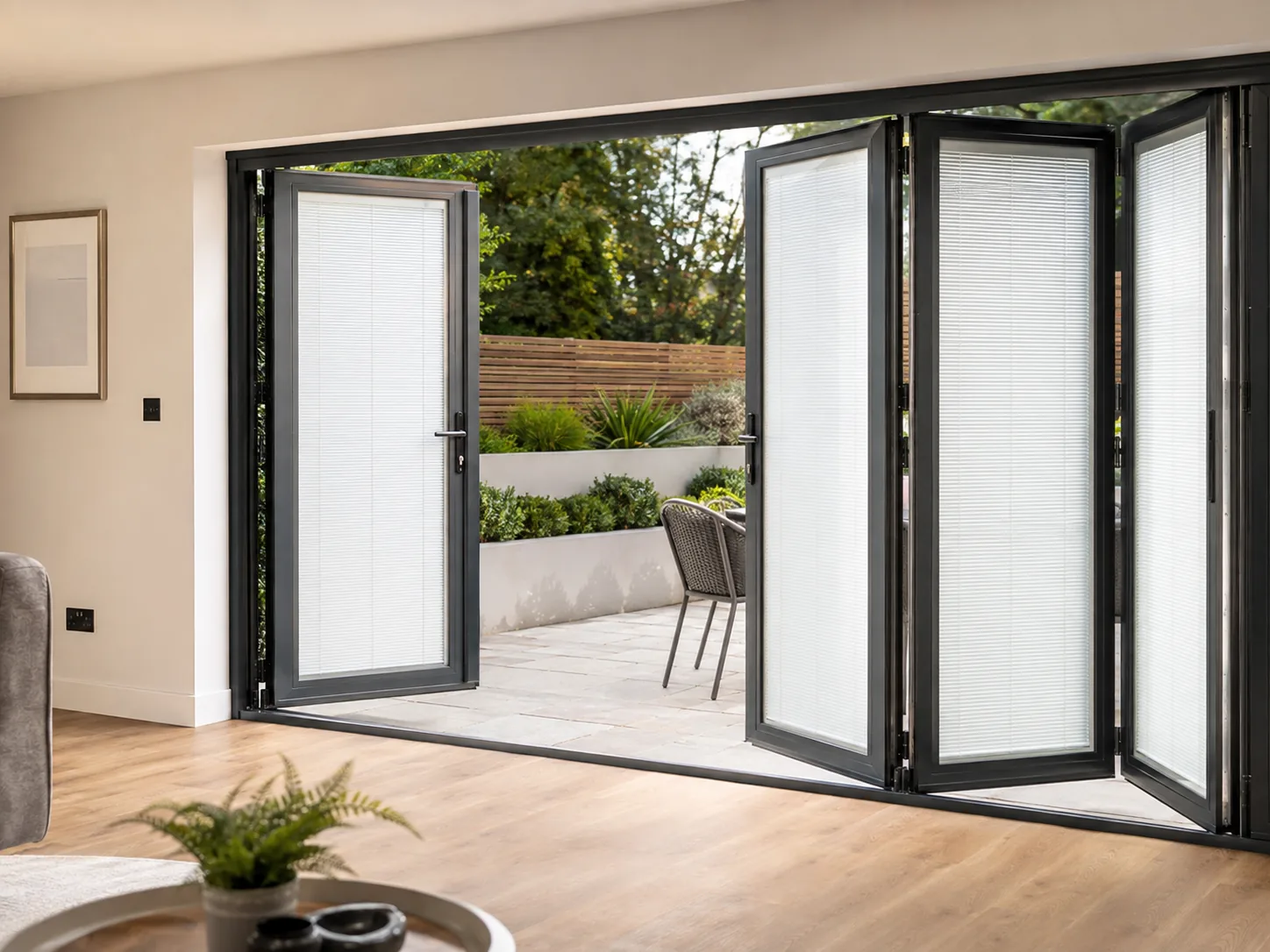
Plan around movement
A blind can look suitable when the doors are closed but become inconvenient once several panels begin to fold together. Four practical details usually matter most.
Panel Movement
Each panel follows a particular path when opened. The blind position should allow that movement without catching neighbouring panels or making the doors awkward to use.
Stack-Back
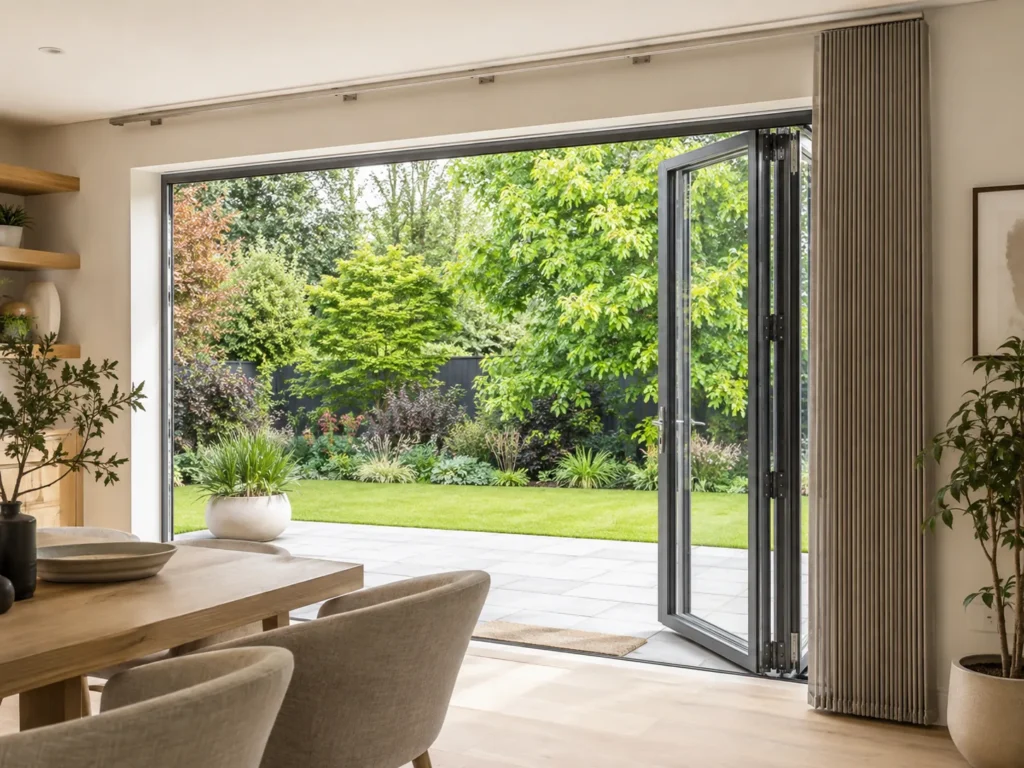
Several folded panels can create a substantial stack. Added blind depth needs to be considered before assuming the doors will still reach their normal open position.
Hardware
Handles, hinges, locks and other projecting parts reduce the usable space around the glazing and may determine which fitting approaches remain practical.
Access
A suitable blind should work with the way you use the doors, whether that means one frequent access panel or regularly opening the complete span.
Follow the movement
Choosing the blind becomes easier when the opening is considered in its three main positions rather than judging the glazing only while everything is closed.
Check the glazing, frame depth, handles and the space available for any blind, brackets or panel-mounted frame.
As panels hinge together, the distance between adjacent door faces changes, so projecting blind components need suitable clearance.
At the end of the movement, several panels gather together. The combined depth of doors and fitted Blinds should remain practical.
Two main approaches
The better approach depends on how the doors are used, the frame construction and whether you prefer independent panel control or one covering across the opening.
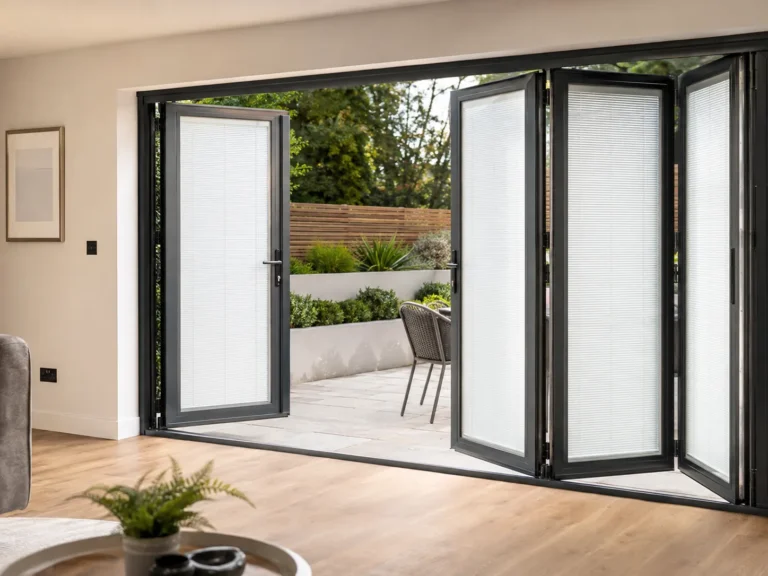
A compatible blind can sit with an individual glazed panel for separate control, provided the added depth remains practical when several panels fold and stack together.
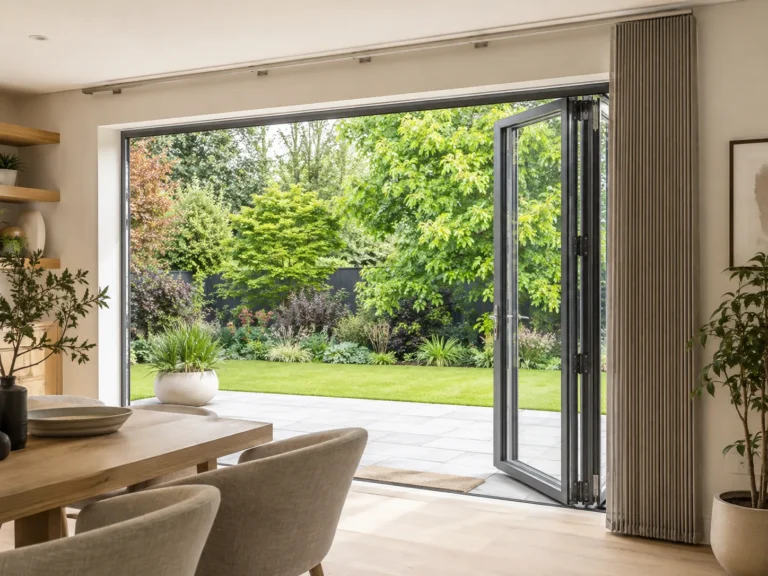
A blind can sit independently across the wider opening, leaving the panels clear, but it still needs a practical open or stacked position that preserves access.
Close to the glazing
Perfect Fit can provide a neat panel-mounted approach on compatible bi-fold doors, allowing the blind to sit close to the glazing and move with the individual door panel.
Suitability should never be assumed. Frame profile, glazing, seals, handles and the available space between folding panels all need to work with the chosen system.
On a suitable panel, the blind remains associated with the door as it opens and closes instead of spanning the complete opening.
Separate Blinds can allow selected panels to be covered while others remain more open where independent control suits the room.
Keeping the blind close to compatible glazing can reduce the amount of separate hardware positioned across the wider doorway.
Not every bi-fold door accepts Perfect Fit. The actual frame and clearances should be assessed during measuring before selection.
Think about daily use
A bi-fold installation used mainly through one access panel creates a different blind requirement from doors that are folded completely back whenever the weather allows.
If one panel is used like a normal everyday door, keep its handle and blind easy to operate. Where the full span opens regularly, the combined panel and blind stack becomes more important.
Arrange a Measuring Appointment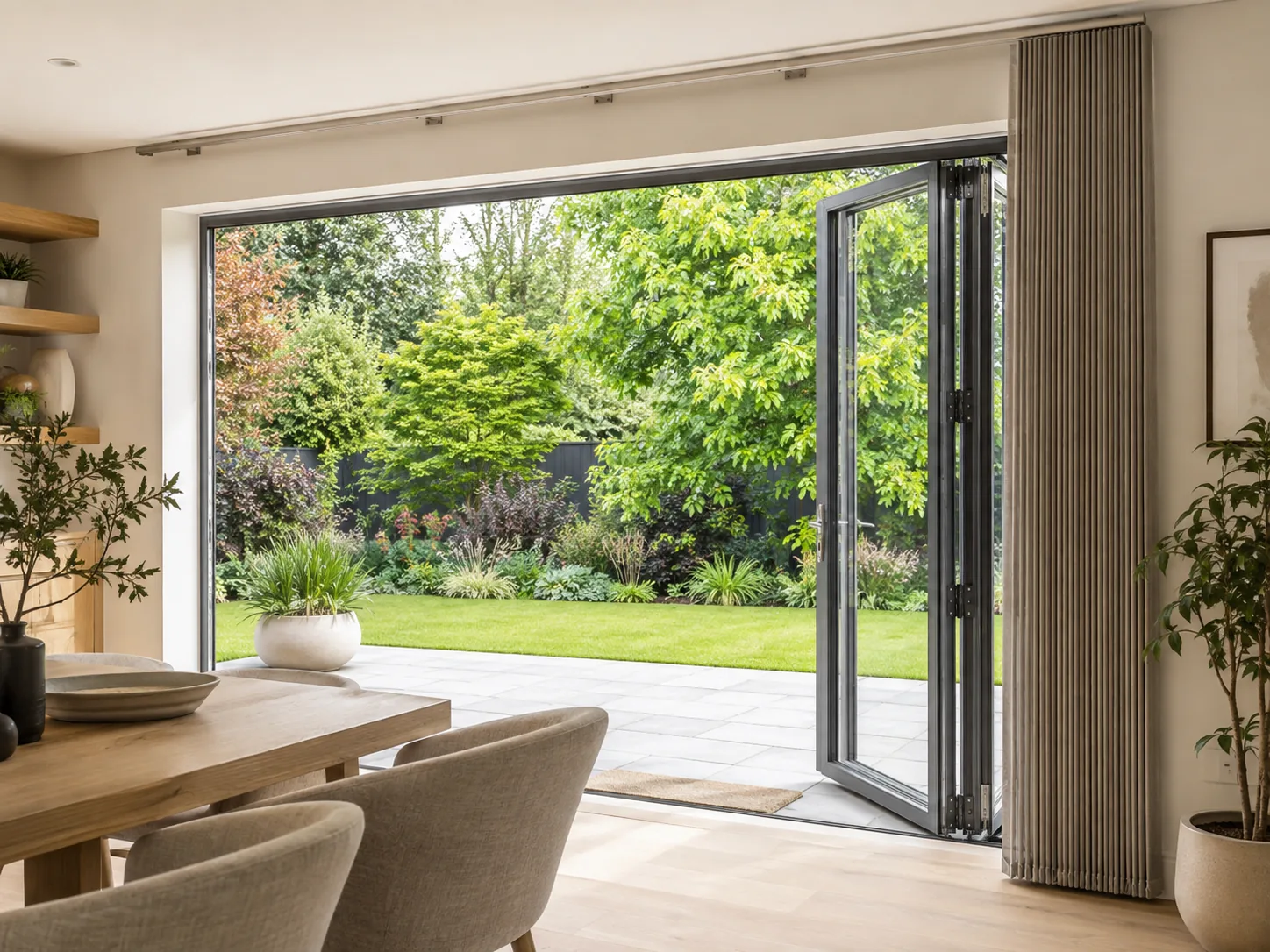
Check the construction
Two bi-fold doors can look similar but provide very different fitting conditions. Frame profile, glazing details and usable fixing space can determine whether a particular system is practical.
This is especially important with panel-mounted or no-drill approaches, where compatibility depends on the exact construction rather than simply the fact that the doors are glazed.
The shape and depth of the frame affect where a blind or mounting system can sit.
Glass position, glazing bead and surrounding details can affect compatibility with certain frame-mounted systems.
Fittings should not interfere with seals or other parts needed for the doors to close and operate normally.
Available depth needs to accommodate the treatment while leaving room for handles, neighbouring panels and normal folding movement.
Allow for the hardware
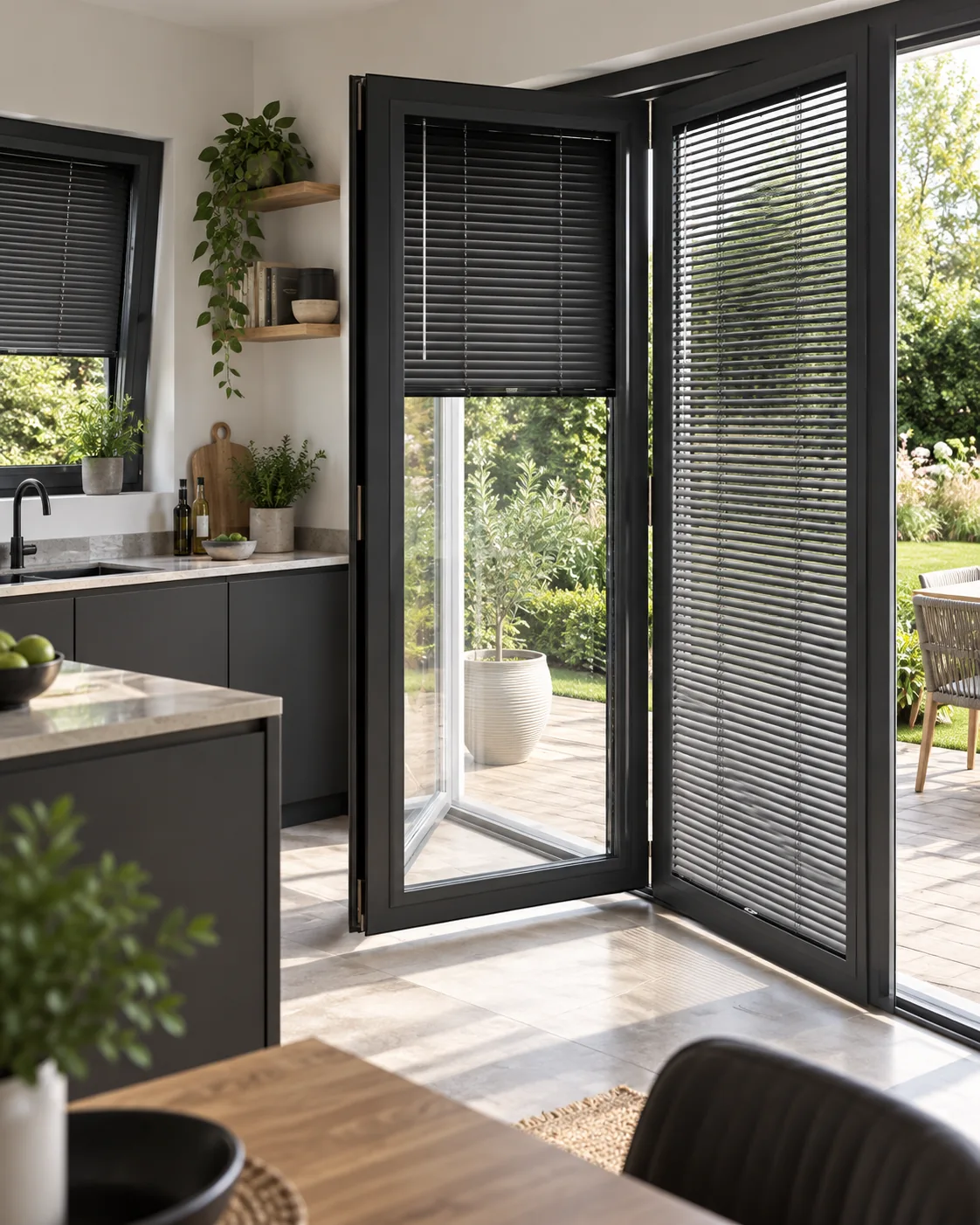
Door hardware is easy to overlook when concentrating on fabrics and colours, but it can be one of the main factors determining where a blind can sit.
Projecting handles can occupy space a blind might otherwise use. They should remain comfortable to grip and turn after fitting.
Folding panels pivot around their hinges, so blind components need to stay clear of areas that move closer together.
Locks, catches and meeting points should stay accessible and should not be obstructed by the chosen blind arrangement.
The panel used most often should remain simple to open and close without repeatedly moving unrelated Blinds out of the way.
Check the real opening
A home appointment allows the recommendation to be based on your actual doors, measurements and priorities rather than assumptions from a standard size or product photograph.
We look at which panels open, how they fold and where the complete door set sits when fully stacked.
The frame profile, glazing arrangement and available fitting areas are considered where they affect the blind options.
Handles, hinges, locks and usable depth are checked so potential blind positions can be considered around normal door operation.
We discuss privacy, daylight, stronger light reduction, individual control and how frequently the opening is used before narrowing down suitable approaches.
Start with the priority
There is no single system that is right for every set of folding doors. Start with the way you want the opening to behave, then consider the compatible blind options.
Panel-mounted
If individual control and an integrated appearance matter, a compatible Perfect Fit or other suitable panel-mounted option may be worth considering.
Explore Perfect Fit BlindsWhole opening
If you prefer not to add Blinds to individual panels, consider a suitable treatment positioned independently across the wider opening.
Compare Door Blind OptionsPowered control
If one larger compatible blind will be adjusted regularly, motorised operation may provide a more convenient control method.
Explore Motorised BlindsLight reduction
If room darkening matters most, focus on suitable blackout materials and fitting details rather than assuming every blind style performs the same.
Explore Blackout BlindsCompare the opening type
Different door styles create different fitting and access considerations. These guides can help if your opening is not a folding-door system or you want to compare another door arrangement.
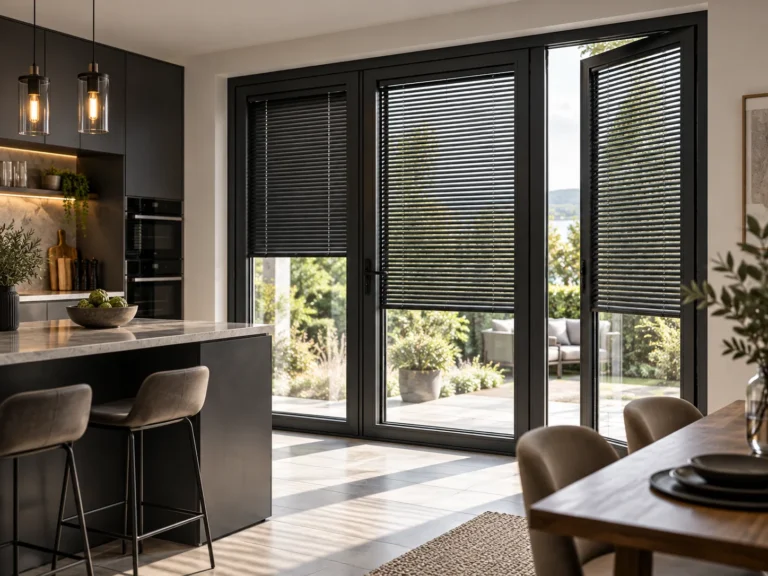
Door guide
An overview of blind approaches for glazed doors, including handles, opening movement, fitting positions and everyday access.
Explore Door Blinds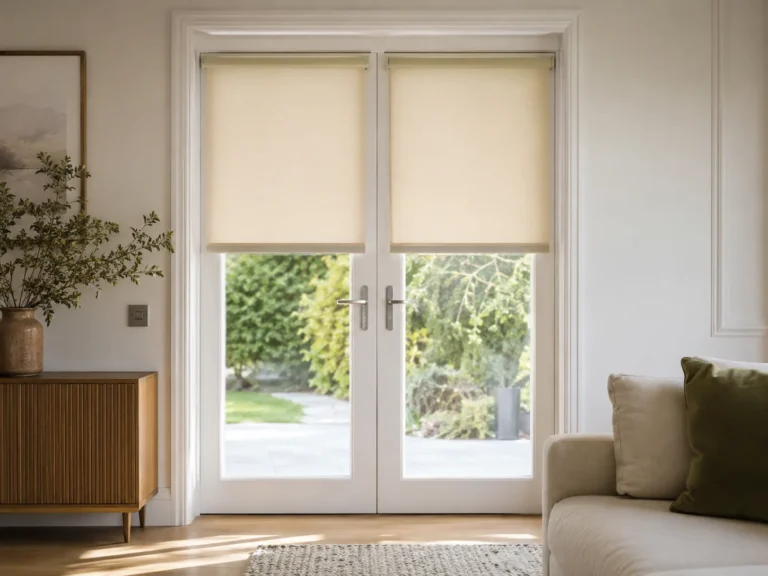
Door guide
Guidance for paired hinged doors, including separate movement, central meeting points, handles and frame-mounted options where compatible.
View French Door Blinds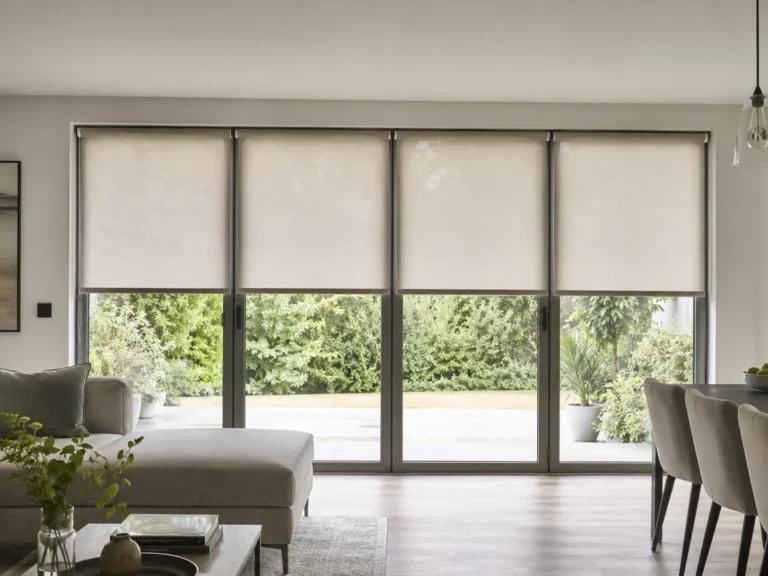
Door guide
Explore options for patio and sliding-door arrangements where wider spans, moving panels and clear access can shape the blind choice.
View Patio Door BlindsExplore the systems
Use these guides when you want more detail about a particular blind system mentioned on this page.
Frame-mounted blind options for compatible windows and glazed doors.
Compact folded-fabric Blinds with light-filtering, dimout, blackout and compatible Perfect Fit options.
Simple fabric Blinds available in a range of light-control and operating choices.
Powered options for compatible blind types where convenience or easier operation is important.
Alternating sheer and opaque fabric bands for adjustable privacy and daylight.
Traversing louvres well suited to many wide windows and glazed openings.
Explore more Blinds
Bi-fold doors are only one part of the Noble Blinds range. Explore other blind styles when comparing options for the rest of your home.
Fabric Blind
A simple, versatile fabric blind with light-filtering, dimout, blackout and motorised options depending on the selected range.
Explore Roller BlindsWide-opening option
Adjustable louvres that traverse sideways, making them particularly useful for many larger windows and wide glazed openings.
Explore Vertical Blinds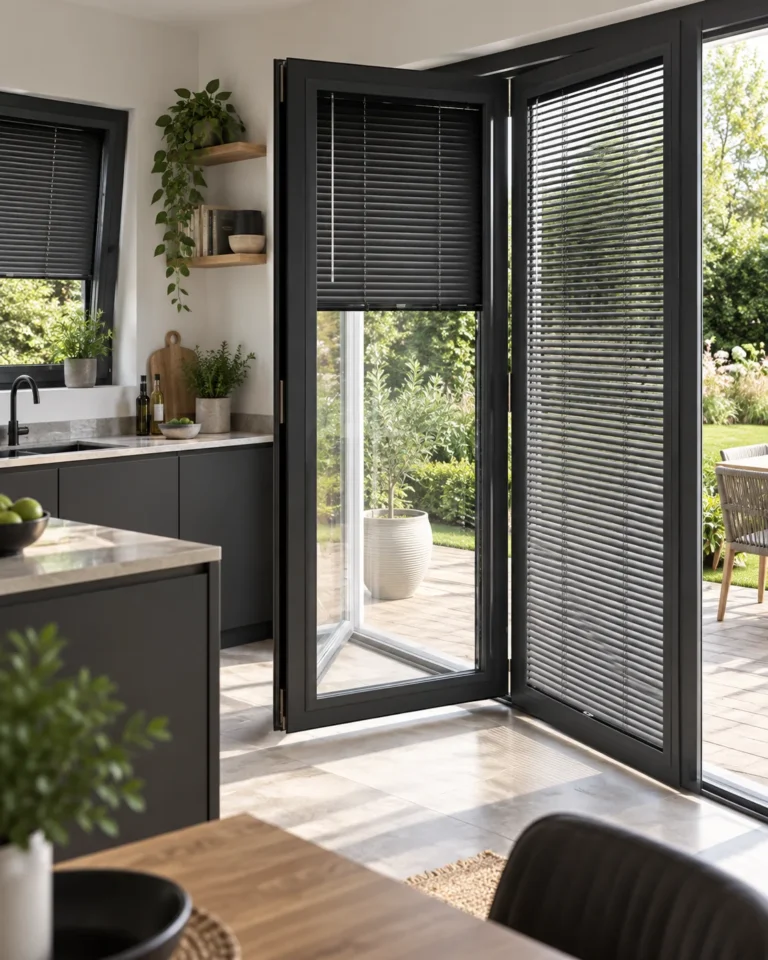
Slatted Blind
Horizontal slats provide precise adjustment of privacy and incoming light across suitable windows and doors.
Explore Venetian Blinds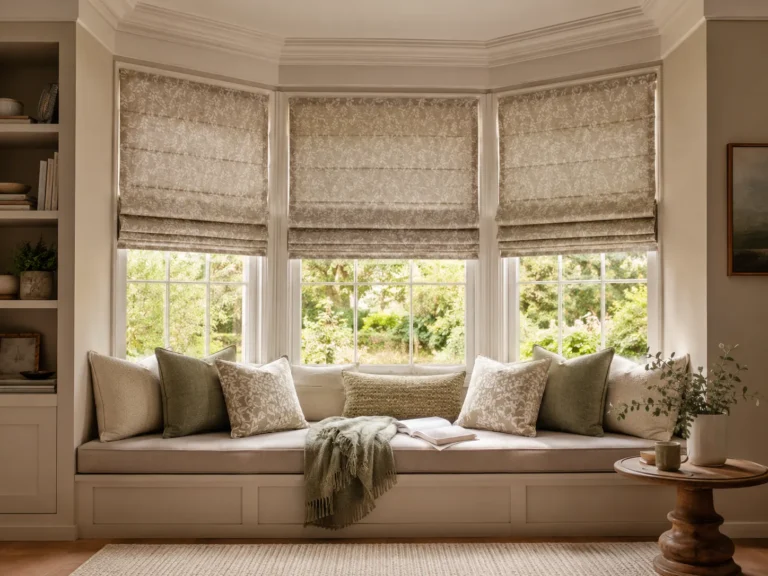
Soft fabric Blind
A softer fabric option that folds into horizontal sections when raised and can add a more decorative finish to suitable windows.
Explore Roman BlindsHelp from start to finish
Our service is designed to help you make a practical blind choice based on the actual opening, followed by made-to-measure supply and professional fitting.
Discuss your requirements where the doors and windows can be assessed directly rather than relying only on remote measurements.
We measure the relevant opening and consider practical details that can affect the fitting approach.
Compare suitable options around privacy, light control, operation and everyday use rather than being pushed towards one blind style.
Receive a quotation based on the selected made-to-measure product and agreed specification.
Your made-to-measure Blinds are fitted professionally and checked for correct everyday operation.
Contact Noble Blinds after fitting if you need help with the supplied product.
A straightforward process
The process keeps product choice, measuring and installation connected so the final blind is based on the real opening rather than a nominal standard size.
Tell us what you need help with and arrange a home appointment.
We measure the opening, discuss your priorities and check the practical details that may affect suitability.
Compare suitable blind options and receive a quotation based on the selected made-to-measure specification.
Your Blinds are supplied to the agreed specification and professionally fitted, with their operation checked after installation.
Customer feedback
Read genuine Google feedback about Noble Blinds service, advice, communication, measuring, professional fitting and the finished result.
Very nice and professional, paying attention to details and your wishes and make sure that everything is how would you like to be, high quality too. Highly recommended 💯
Great customer service quote and fitting are quick I’m really happy with my blinds they look stunning! Thank you again TikTok friend
Excellent service from start to finish. Good quality blinds friendly and efficient chap who knows his stuff. Fitted all mine today in no time. Would definitely recommend Luxury Blinds
Great service and amazing quality blinds all fitted very professionally plus very quick service. Thank you
Fast and efficient service, blinds look great and made room look new.
The person was great and love the blinds .thanks
Great service, fantastic job, great quality! Patient and understanding and I'm definitely recommending to family and friends. Thank you again!
Job well done and very friendly service, highly recommend this company
Great service, fantastic job. I’m very happy with the service definitely I’m gonna recommend my family and friends thank you.
Professional service provided and amazing quality blinds, would highly recommend. Thank you.
West Yorkshire service
Choose your Area to open the published local Bi-Fold Door Blinds page. Noble Blinds provides home appointments, measuring, made-to-measure supply and professional fitting across West Yorkshire.
Practical questions
These questions cover practical details that often matter once you start thinking about how a blind will work with the movement, hardware and everyday use of your doors.
There is no single clearance figure that suits every bi-fold door. The blind depth, handles, hinges, panel direction and final stacked position all matter, so the available space should be checked during professional measuring before a system is chosen.
No. Individual Blinds depend on the panel frame, glazing arrangement, handles, hinges and how the door folds. Some panels may accept a frame-mounted solution while another treatment may be more practical for the opening as a whole.
A whole-opening blind can make more sense when panel-mounted Blinds are unsuitable, when fewer individual Blinds are preferred, or when the door panels need to remain visually clear. Access and the blind's own stack position still need checking.
Handles, hinges and locks can project into the space a blind needs when the doors close or fold. A suitable blind must sit where it can operate without clashing with the hardware or restricting normal door movement.
No. Perfect Fit depends on the exact frame and glazing arrangement being compatible with the system. It can be a useful panel-mounted option on suitable doors, but compatibility should be confirmed during measuring rather than assumed.
Where a suitable blind is mounted to the door panel, it can move with that panel as the doors are used. The key is confirming the blind and stacked panels still have enough space to move normally.
Often, yes. Separate panel Blinds can allow privacy or shading on selected panels while others remain more open. The result depends on the blind type, panel arrangement, viewing angle and whether the room is brighter inside after dark.
Blackout fabric can provide strong light reduction, but several moving panels create edges and joins where light may still enter. For that reason, blackout fabric should not be described as guaranteeing a completely dark room across a bi-fold opening.
A Vertical or Roller blind across the wider opening may be more practical when individual panel fitting is unsuitable or one covering is preferred. Doorway access, available wall or recess space, and where the blind stacks still need checking.
Motorisation can be useful for a larger blind across a wide opening, for frequent adjustment or where manual operation would be inconvenient. It is only relevant where the selected blind system supports motorisation and remains practical around the doors.
Need help choosing?
Have your doors measured at home, discuss suitable blind approaches and receive practical advice and a quotation based on the opening, fitting conditions and the way you want to use your bi-fold doors.