
Glare control
Reduce uncomfortable direct brightness while keeping useful daylight in the room where the selected material allows.
Roof lantern blinds Leeds
Noble Blinds is based in Leeds, West Yorkshire. We visit the property so the roof lantern, access, light levels and preferred operation can be assessed together before a made-to-measure blind is specified.
At your home or property
Roof lanterns can vary in shape, span, frame depth and glazing layout. A visit lets us check the details that affect suitability rather than relying on a photograph or rough measurement alone.
A roof lantern is not specified from width and length alone. Span, angles, glazing bars, frame depth, blind travel, fixing points, safe access and the preferred control method can all affect the final solution. Our Leeds survey brings those details together before supply and fitting are agreed.
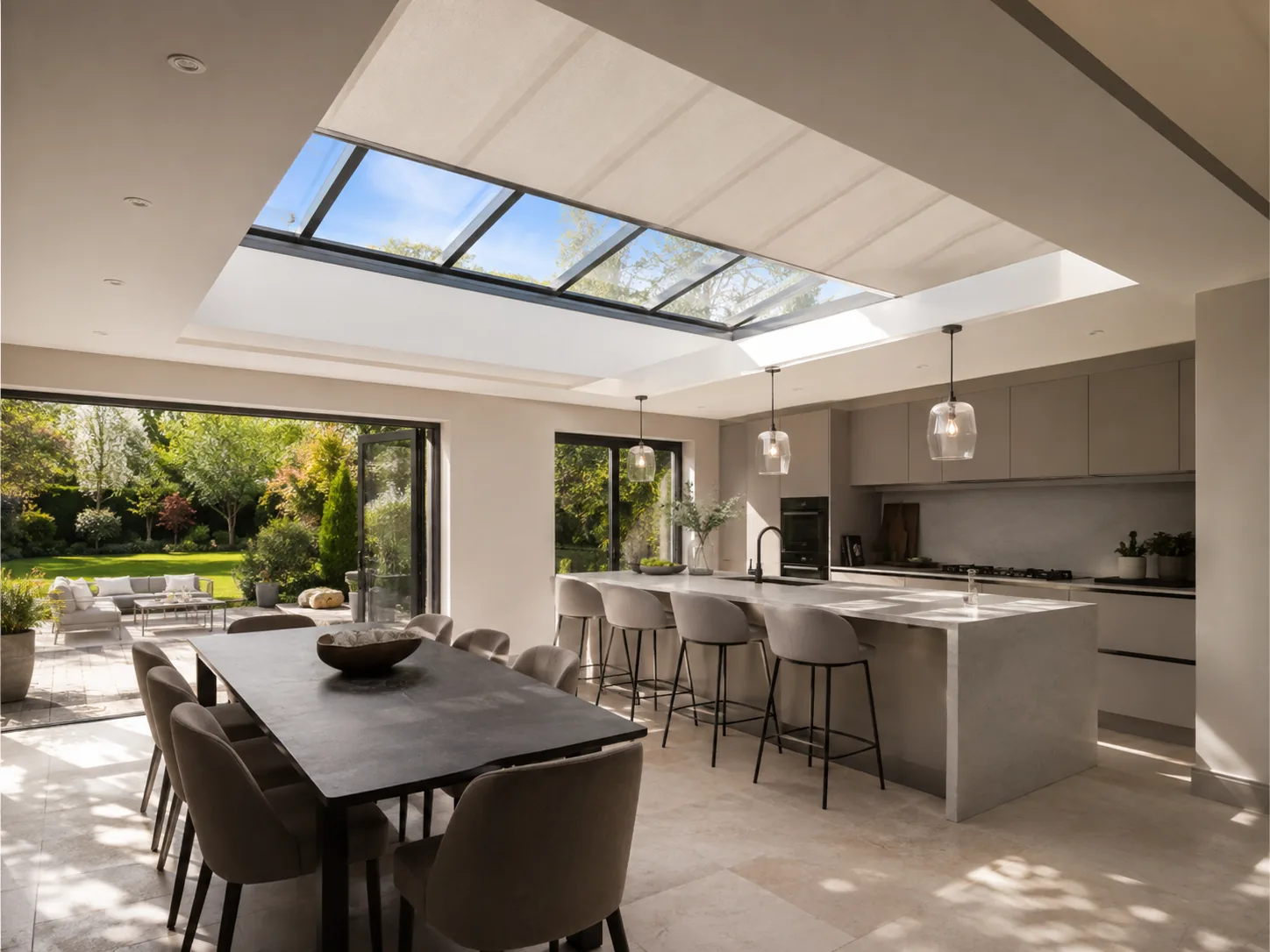
Suitable roof lantern blinds can make strong overhead light easier to live with, but the result depends on the glazing, orientation, blind system, material and fitting position. We explain the expected performance for the measured opening rather than promising a fixed outcome.
Reduce uncomfortable direct brightness while keeping useful daylight in the room where the selected material allows.
Suitable shading can reduce some solar heat, although the result varies with glazing, orientation, material and how the blind is used.
Selected blackout systems are available, but side gaps, junctions and unusual shapes can prevent a completely dark room.
For high or difficult-to-reach glazing, selected motorised or electric controls can make regular adjustment more practical.
Made-to-measure planning
A reliable quotation and fitting plan depend on the real opening, the way the blind will travel, safe access and the chosen controls—not a rough width and length.
Made-to-measure roof lantern blinds for Leeds properties are specified after the frame, angles, support points, access and operating requirements have been checked. Any restriction is explained before the order proceeds.
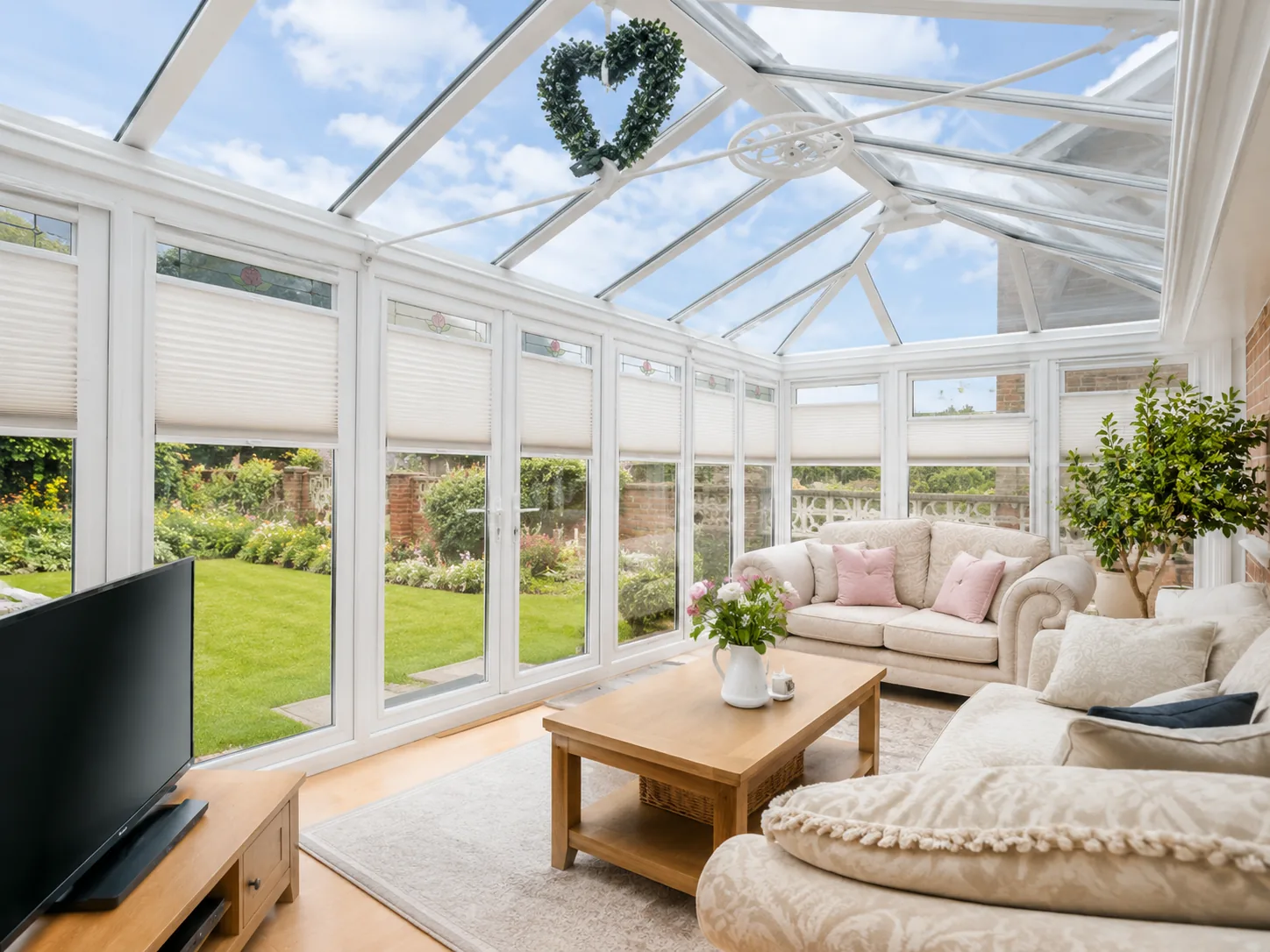
A clear process keeps the opening, blind system, controls, access and fitting scope aligned before anything is ordered.
For roof lantern blind installation in Leeds, accurate measuring is only one part of the job. The selected system also needs suitable fixing points, enough clearance to travel correctly and an operating method that can be used and maintained safely after fitting.
Before the order is placed
High overhead glazing can introduce access, power and installation requirements that are easy to miss from a photograph. These points are checked during the survey and reflected in the quotation.
Use the route that matches the opening and the type of advice you need. This Leeds page focuses on local roof-lantern surveying and fitting, while the linked pages provide deeper product or service information.
Read the main product guide for roof-lantern systems, performance considerations and general specification advice.
Explore powered blind controls where high-level glazing or regular adjustment makes manual operation less practical.
Compare options for individual skylights and roof-window openings that are different from a roof lantern.
Use the VELUX route when the opening is a compatible VELUX roof window rather than a roof-lantern structure.
For larger conservatory glazing, compare room-wide shading options rather than assuming a roof-lantern system is the right fit.
See how professional measuring, specification and fitting work across made-to-measure blind projects.
Clear guidance on suitable systems, glare, blackout limits, powered controls, safe measuring, fitting details and quotation factors.
Roof lantern blinds are specialist tensioned, pleated, cellular or other guided systems designed to span overhead roof-lantern glazing and remain controlled in a horizontal or angled position. The product name is only the starting point: the room, opening, privacy, light control and preferred operation still determine the right specification. At the free measuring visit, we inspect those details and explain suitable made-to-measure options. The agreed blind, supply arrangement and fitting scope are then recorded in writing before an order is placed.
The suitable system depends on shape, span, frame construction, support points and whether one blind or several sections are required. Final suitability depends on dimensions, opening movement, handles, moisture, access and the required balance of privacy and daylight. We assess these points during the free measuring visit rather than confirming a system from a photograph or rough size alone. Any maximum-size limit, special hardware or project restriction is explained and written into the quotation before the order proceeds.
Suitable roof shading can reduce direct glare and solar gain, but the result depends on glazing, orientation, fabric and how the blind is used. Actual performance also changes with the fabric or material, window orientation, interior lighting, fitting position and how the blind is adjusted. We therefore explain the expected level of privacy, glare reduction, heat control or insulation for the selected system rather than guaranteeing a fixed result. The chosen performance features are recorded in the quotation.
Selected blackout roof-lantern systems are available, although junctions, side gaps and unusual shapes can affect total darkness. “Blackout” describes the material or a specialist system, not an automatic guarantee that the whole room will become completely dark. Recess shape, brackets, stitches, side gaps and fitting position can all admit light. We discuss the expected result during measuring and consider framed, cassetted or guided options where the opening and supplier system allow.
Motorised or electric operation is normally preferred because the blind is overhead and often inaccessible; the exact motor depends on size and load. Availability depends on blind type, dimensions, weight, access and the current supplier system. Before ordering, we confirm the power source, charging or wiring requirements and the preferred controls. A qualified electrician may be needed for mains work. After installation, we set and test the operating limits and demonstrate the supplied handset, switch or app functions.
Options can include rechargeable, battery or mains power, remote handsets, wall controls, apps or compatible smart integration, depending on the selected system. We select the motor only after checking the blind load, opening and frequency of use. Battery, rechargeable, mains and selected solar options have different access and installation needs. The survey also establishes where controls, chargers or cables will go. We commission the completed system and explain operation rather than leaving the customer with untested controls.
The specification records each dimension and angle, glazing bars, frame depth, blind travel, support points, power access and maintenance access. This cannot be confirmed safely from a generic measurement. At the free survey, we inspect the frame, recess, angles, handles, seals, opening movement, fixing surfaces and access. We then choose a specification and fitting position that can operate without avoidable clashes. Any restriction is written clearly in the quotation before ordering.
High roof lanterns are measured using safe access and appropriate equipment; customers should not climb or provide unchecked final dimensions. Small construction details can determine whether the system fits and works properly. We therefore measure the complete opening, not just width and drop, and check moving parts, clearances and safe fixing positions. The result of that assessment is used to confirm the product, configuration and any limitation in writing.
Opening vents, trims, lights, sensors and moving roof sections must be mapped so the blind and hardware do not obstruct them. A site check is required because the same nominal window size can have different beads, frames, handles or recess conditions. During measuring, we verify compatibility and practical operation, then plan the blind around those details. We do not place the order until the intended fit and any necessary compromise have been explained.
We do not publish a fixed price for roof lantern blinds because the quotation depends on lantern size and shape, number of blind sections, fabric, motor capacity, controls, power, access equipment and installation complexity. The free measuring visit confirms the real opening and specification instead of relying on a misleading estimate. The written quotation identifies the agreed supply and fitting scope, notes any exclusions or special work and gives the total for approval before the order is placed.
Send your Leeds postcode, the roof-lantern shape, approximate dimensions if known, photos if they can be taken safely, and any access or control requirements. We can then discuss the next step and the information needed for an accurate specification and quotation.