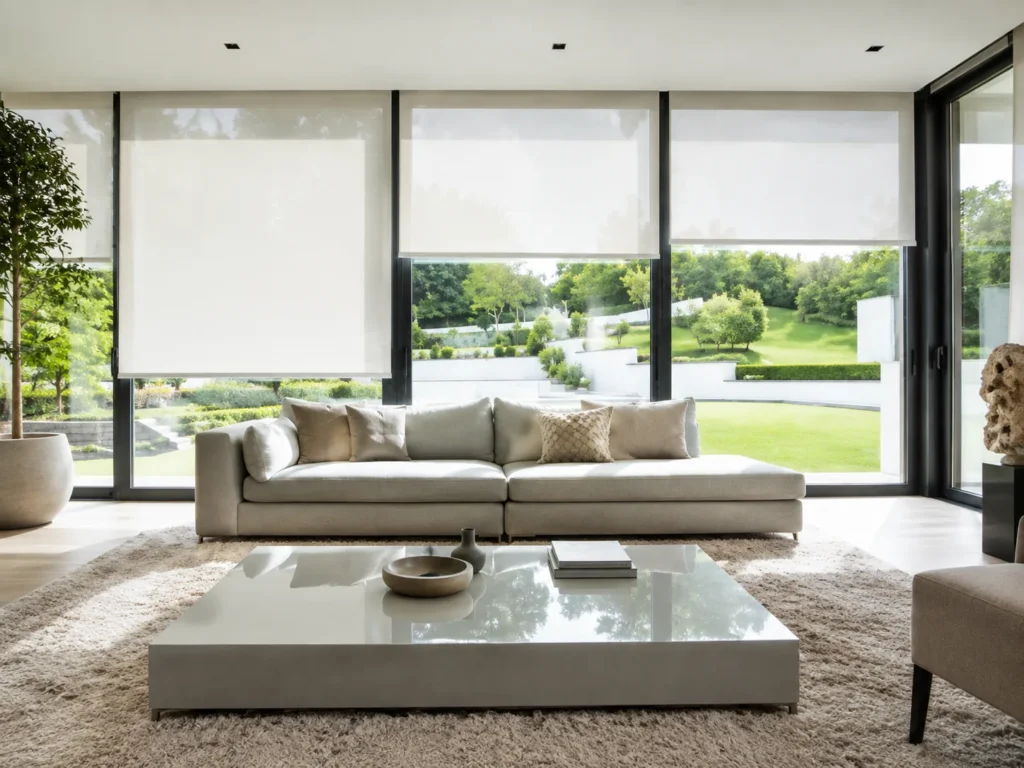
Simple, Uncluttered Styling
A single fabric panel creates a neat window finish without adding a heavy side stack or layered treatment.
Made-to-Measure Roller Blinds
Choose made-to-measure Roller Blinds for a clean, practical finish, with fabric, light-control and operating choices suited to how you use the room.
Tell us about your windows and what you would like the blinds to achieve. We can arrange measuring, discuss suitable Roller options and prepare a quotation.
Simple Fabric Window Covering
A Roller blind uses one continuous piece of fabric that lowers across the window and rolls neatly away when raised.
The main choices normally centre on fabric, opacity, operation and fitting position. Standard, dimout, blackout, motorised and compatible Perfect Fit Roller options can be considered where suitable.
Ask About Roller Blind Options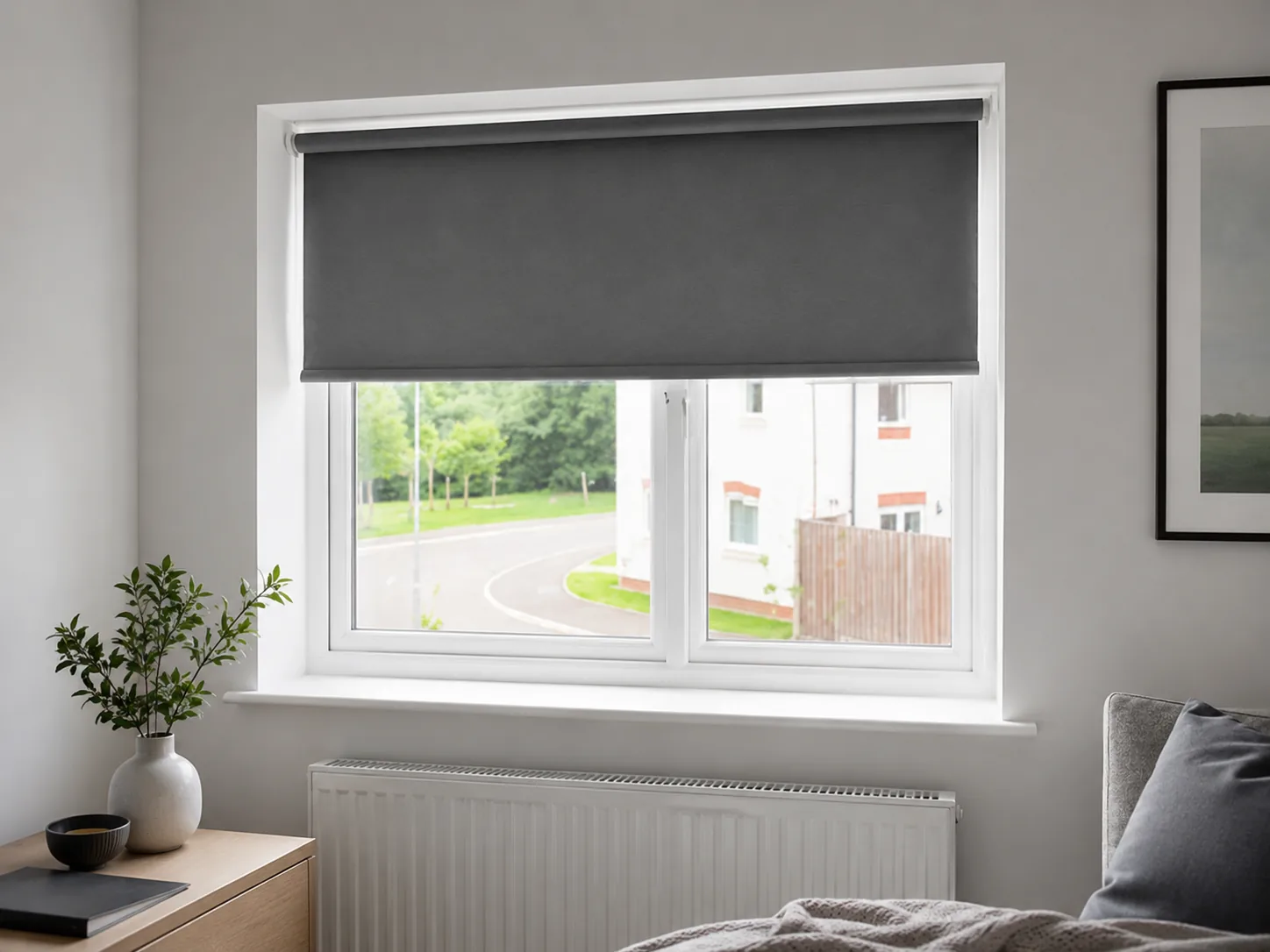
Everyday Roller Blind Benefits
Roller Blinds combine a simple appearance with useful fabric and operating choices, making them practical where the window treatment should work without feeling visually complicated.
A single fabric panel creates a neat window finish without adding a heavy side stack or layered treatment.
Plain, patterned and textured choices can coordinate quietly with the room or create a stronger decorative feature.
The fabric rolls upwards, helping keep the surrounding window area visually simple when the blind is open.
Suitable fabrics can soften daylight, reduce glare or provide stronger light reduction according to the room.
Simple raise-and-lower control works well for everyday windows, with motorisation available where powered operation adds practical value.
Made-to-measure sizing lets the final position account for recess depth, handles, window movement and required coverage.
Around the Home
Different rooms place different demands on a blind. Roller Blinds can adapt where a simple fabric covering provides the right balance of appearance, privacy and daylight control.
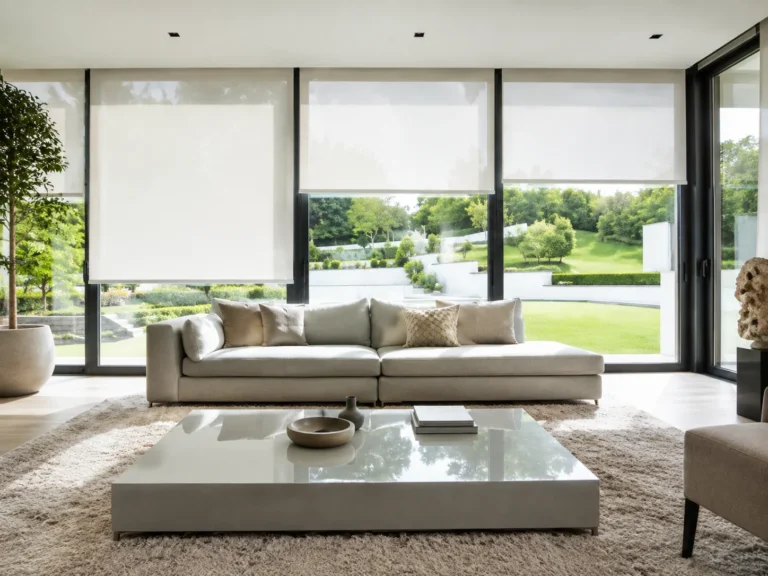
A clean option where manageable daylight, privacy when required and a simple window finish are the main priorities.
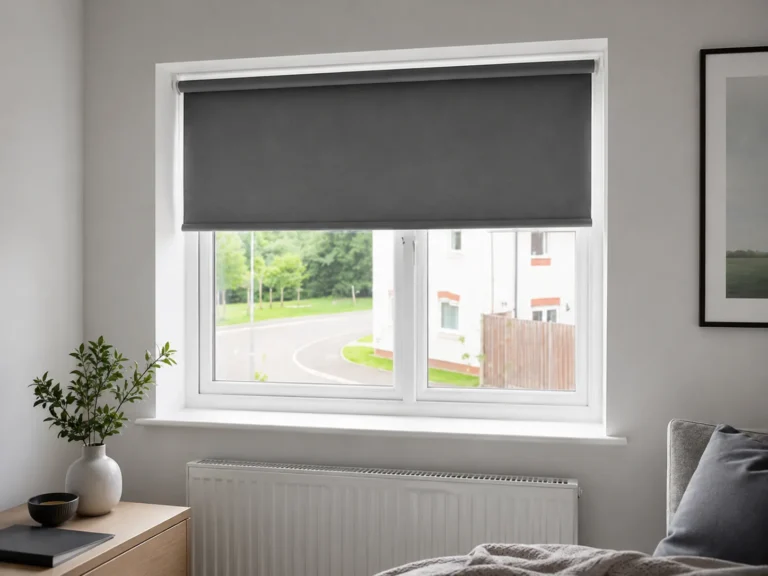
Choose the fabric around the level of light reduction and privacy required, including dimout or blackout where appropriate.
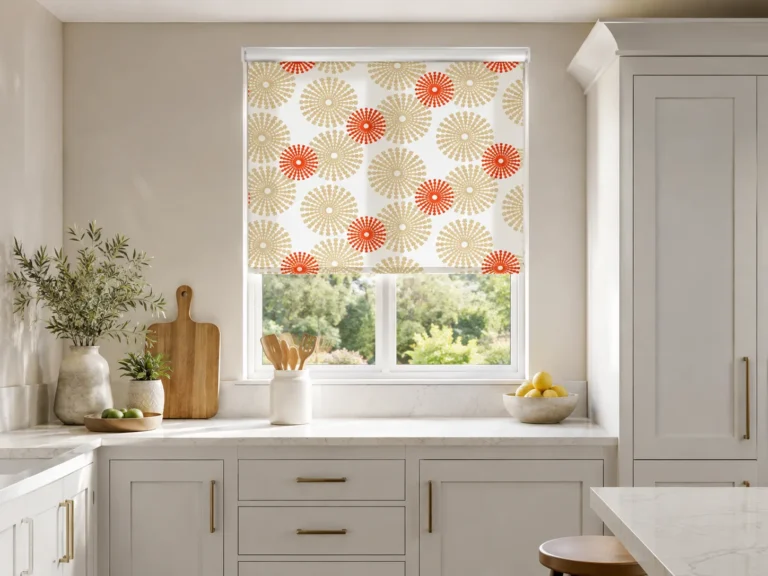
A compact treatment can work well where the selected fabric and fitting position suit the room conditions and normal window use.
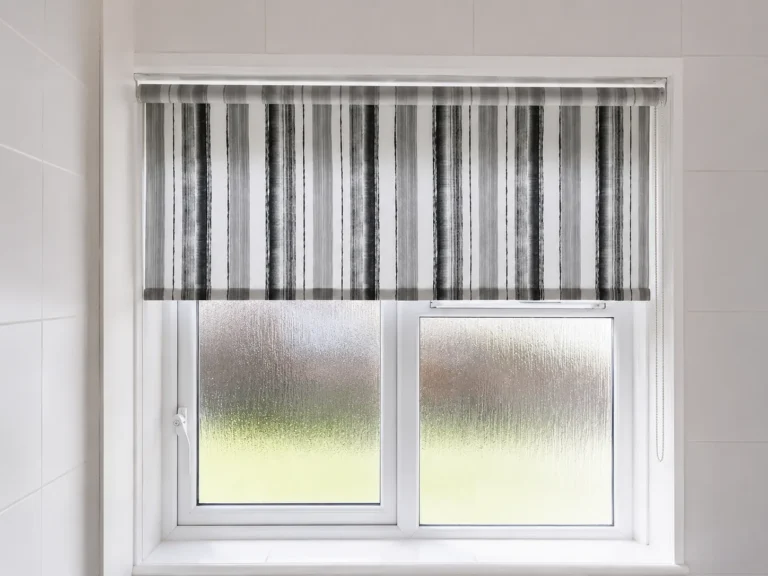
A Roller may suit an appropriate bathroom window where the selected material suits the conditions and normal ventilation remains practical.
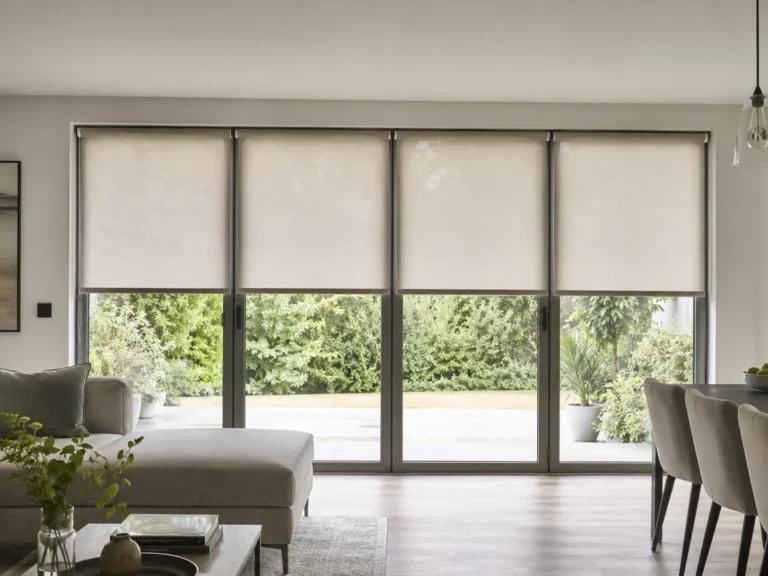
One or several Roller Blinds can divide larger glazing into manageable sections where the opening and selected system are suitable.
Start with the Opening
Available fixing space, opening movement and nearby hardware should be understood before deciding how the Roller blind will sit.
Straightforward windows are often suitable where there is enough fixing space and the blind can move without obstruction.
A shallow recess may still allow a Roller blind, although an outside-recess position can sometimes be more practical.
Check whether the blind, roller or brackets could interfere with a sash or window that opens into the room.
Handles, locks, hinges and regular access affect whether a standard Roller or another suitable fitting approach makes sense.
Larger openings may need a choice between one Roller and several separate blinds depending on system suitability and operation.
Neighbouring Roller Blinds can be planned together so their positioning and proportions feel considered across the complete window area.
Manage the Window Better
Think separately about daylight, privacy and glare before deciding which Roller fabric suits the room.
Daylight
A lighter suitable fabric can soften the window while retaining more daylight than a darker or more opaque alternative.
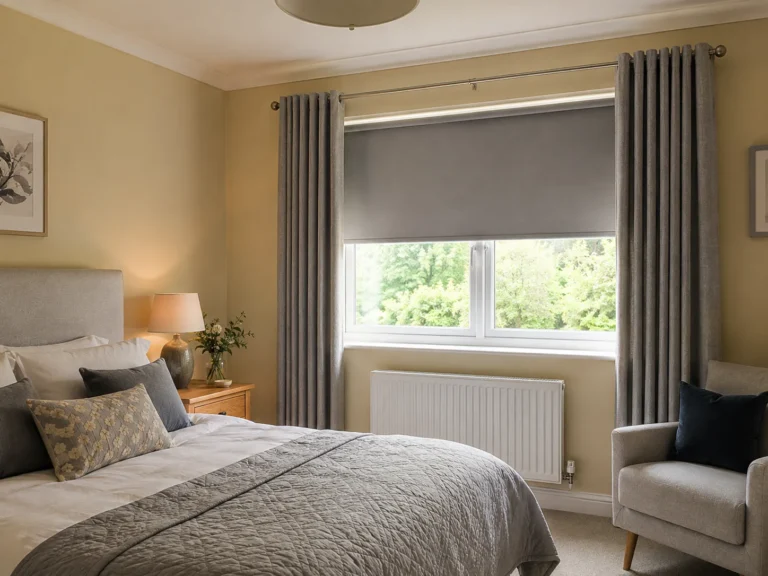
Privacy
Privacy can change after dark when lights are on indoors, so choose opacity around when the room most needs screening.
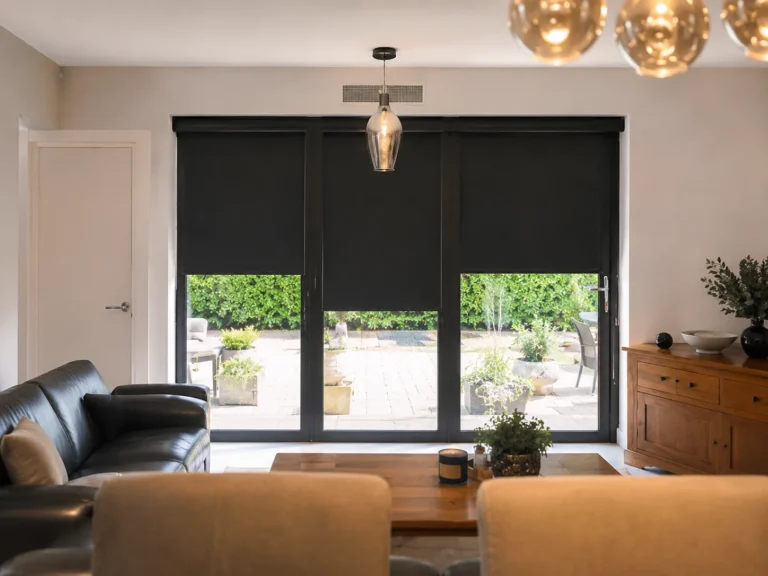
Glare
A suitable fabric can reduce uncomfortable brightness around screens or strongly lit windows without necessarily making the room very dark.
Know What to Expect
Fabric opacity is only one part of the result. The material, fitting position and possible light around the edges all affect how dark the room feels.
Dimout fabric reduces incoming light and glare while normally leaving more ambient brightness than blackout material.
Blackout fabric is intended to stop light passing directly through the material where stronger light reduction is required.
Light can remain around the sides, frame, recess or hardware because a standard Roller does not necessarily seal the complete opening.
If darkness matters, discuss both the selected fabric and the way the blind will cover the opening rather than relying on the fabric name alone.
Choose How It Operates
The useful question is whether powered operation genuinely makes the blind easier to use in that particular room.
Manual operation suits normally sized blinds that are comfortably within reach and do not need frequent powered adjustment.
Motorised Roller Blinds provide powered operation where easier adjustment is worth prioritising.
A manual blind can remain the simpler choice where access is comfortable and powered control offers little practical benefit.
Motorisation can be useful where a blind is high, difficult to reach or inconvenient to operate manually.
Manual operation avoids the extra power and control choices that come with a motorised specification.
Motor, power, app, voice and smart-home features vary between systems and should only be stated where compatibility is confirmed.
Choose the Fitting Approach
Consider both the fitting system and the blind position around the opening before deciding which approach is most practical.
Conventional Fit
A conventional Roller is fitted independently of the opening window or door and can sit inside or outside the recess.
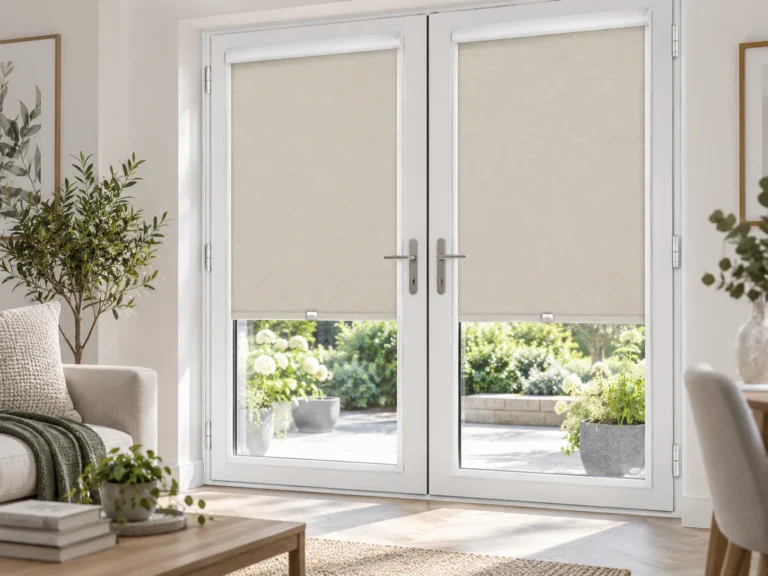
Frame-Mounted
On compatible glazing, a Perfect Fit Roller can sit closely within a frame-mounted system and move with the opening.
Explore Perfect Fit BlindsInside Recess
A recess fit can give a contained appearance where there is enough usable depth and no conflict with handles or moving parts.
Outside Recess
An outside-recess fit may suit shallow recesses or obstructions and can provide more overlap around the opening.
Explore Other Requirements
A Roller blind will not suit every opening or priority. These routes help when shape, operation, darkness or a different style becomes the main decision.
Explore solutions around multiple panes, angles, symmetry and clearance in a bay window.
View Bay Window BlindsExplore broader room-darkening choices where realistic light exclusion is the main priority.
View Blackout BlindsExplore powered-operation choices where access or frequent adjustment matters more than the blind type alone.
View Motorised BlindsExplore shading for overhead or sloping roof glazing where angle, access and operation change the fitting requirement.
View Skylight BlindsConsider alternating fabric bands where more adjustable behaviour between daylight and privacy is preferred.
View Day & Night BlindsExplore real wood and faux wood slatted choices where appearance and adjustable slat control lead the decision.
View Wooden BlindsConsider horizontal slats where more precise adjustment of incoming light and privacy is important.
View Venetian BlindsExplore compact pleated fabric where a softer fold or particular window application makes that format more suitable.
View Pleated BlindsOne Roller can give a cleaner uninterrupted line where the selected system suits the width. Several blinds add independent control but introduce visible gaps and separate bottom edges, so the opening and system capability should guide the decision.
One Blind or Two Functions
A double arrangement only adds value when two genuinely different fabric functions are useful at the same opening.
One Roller keeps the treatment simpler, with one chosen fabric providing the required balance of appearance, privacy and light control.
Where the selected system supports it, two Roller fabrics can serve different functions but require additional space and a more complex arrangement.
Plan Controls Carefully
Control choice should form part of the complete Roller blind specification, particularly where young children may access the window area.
Keep operation practical for adults while allowing the appropriate child-safety requirements around the window to be addressed.
Where a manual system requires a suitable safety device or control arrangement, it should be installed and used as intended.
Where suitable, an alternative operating method may provide a better combination of safe use, access and everyday convenience.
Check More Than Width and Drop
The final Roller blind needs to work around the real opening, moving parts and surrounding features rather than a nominal window size.
blind dimensions should reflect the chosen fitting position and the real shape and size of the opening.
Tiles, trim, vents and handles can reduce usable depth even where the recess initially appears large enough.
The blind should operate without preventing normal access to handles, locks or other window and door hardware.
Inward-opening windows or doors need enough clearance to move normally without striking the blind or brackets.
The final position should suit the available surface, required coverage and surrounding features of the opening.
Sills, radiators, furniture, tiles or neighbouring blinds can affect how the finished Roller operates and looks.
Start with Your Priority
Begin with what the blind needs to achieve. The appropriate Roller option follows from the opening, light requirement and preferred method of operation.
Consider a conventional Roller where the opening is straightforward and simple everyday operation is the main priority.
Consider blackout fabric where blocking light through the material matters, while allowing for possible light around the completed installation.
Consider motorisation where a blind is high, difficult to reach, large or adjusted frequently enough for powered control to add real value.
Consider a compatible frame-mounted option where having the blind move with the opening window or door would improve normal use.
Compare the Closest Alternatives
Compare how these blind types look, operate and manage light before deciding which style best suits the opening and room.
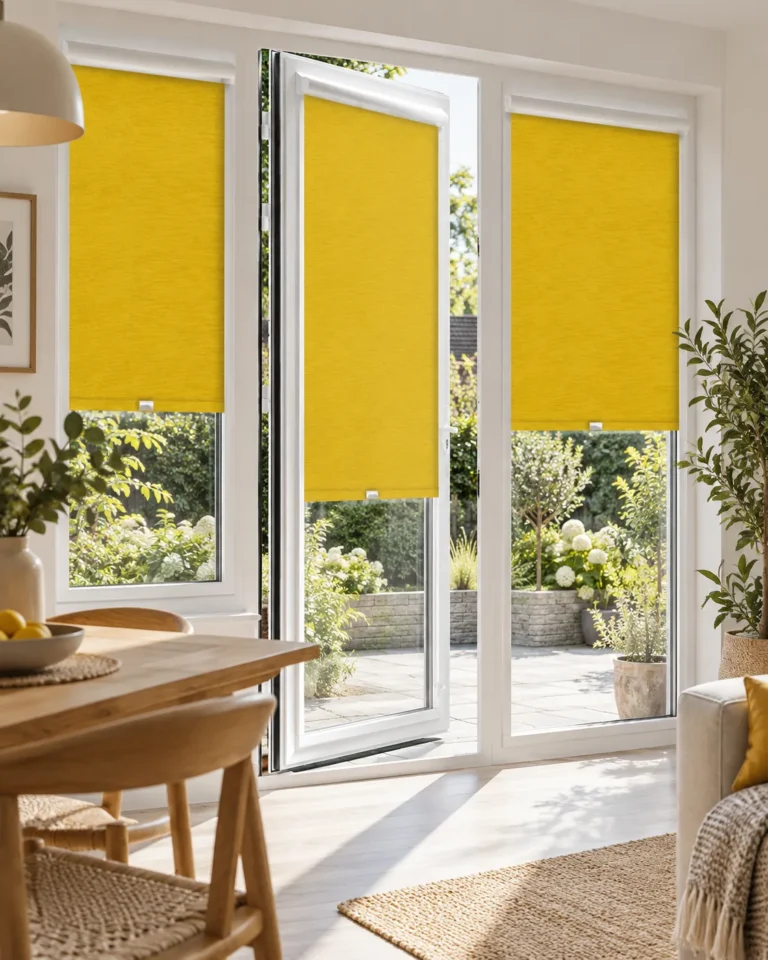
A simple fabric panel with compact styling and broad fabric flexibility.
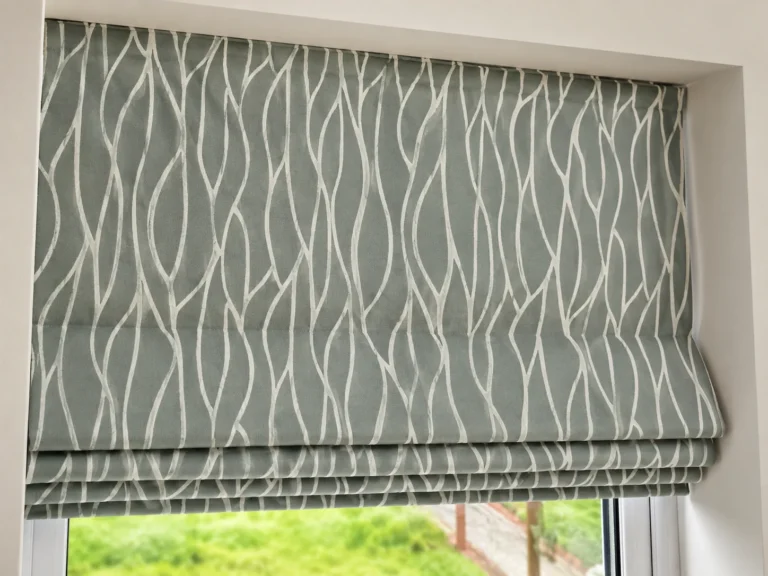
A softer fabric treatment with decorative folds and a more layered appearance.
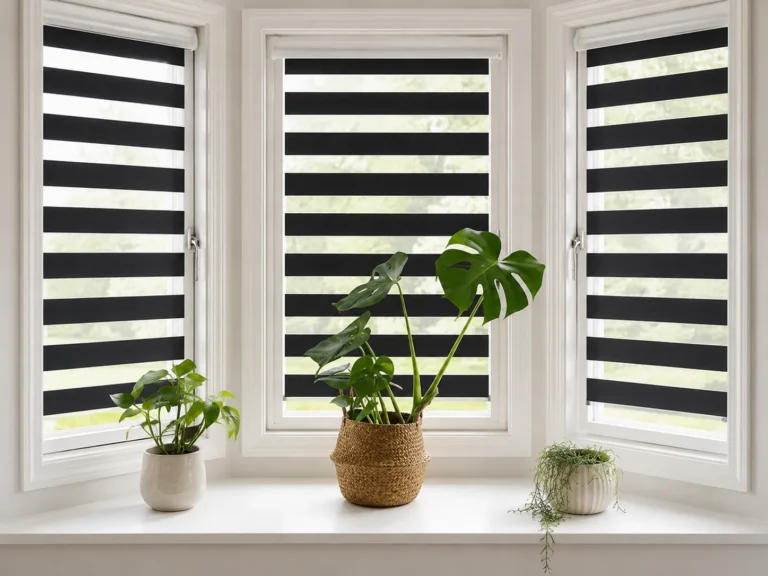
Alternating bands provide more adjustable behaviour between daylight, view and privacy.
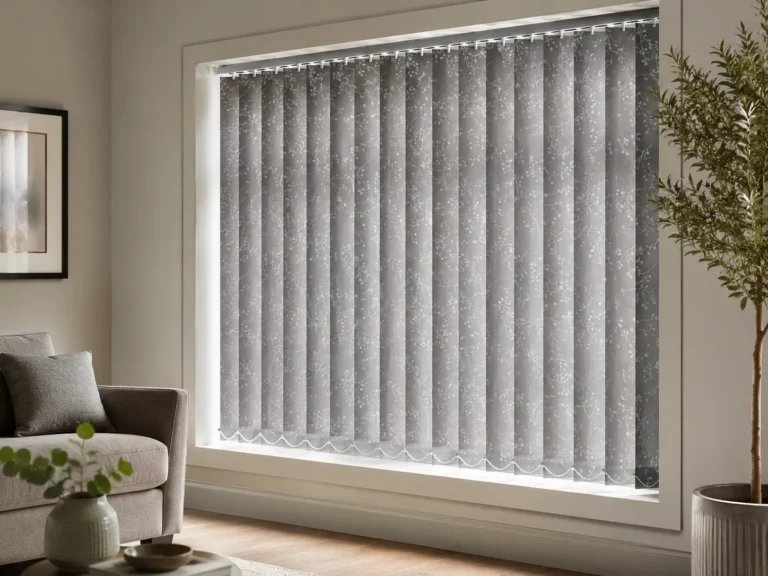
Adjustable vertical louvres and sideways stacking can be particularly useful across wide glazing.
For More Specific Openings
Some openings create a more specific fitting problem than a standard Roller page should answer. These guides focus on the opening itself.
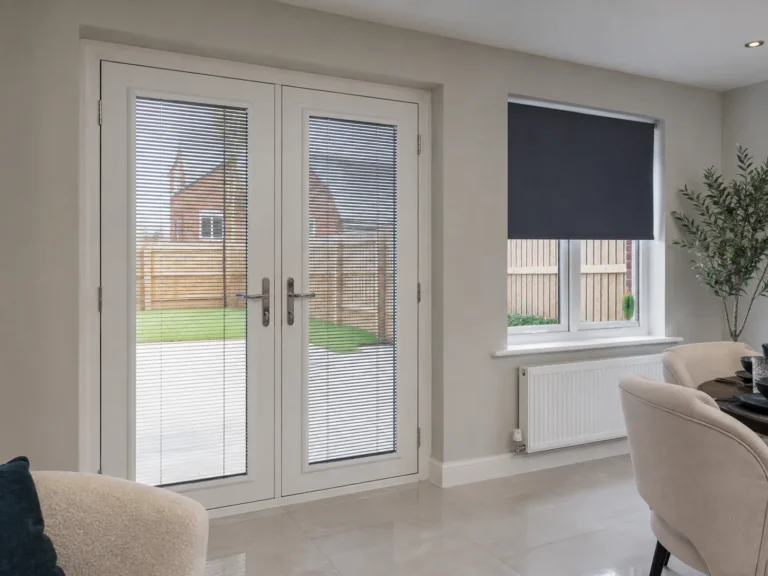
Glazed Doors
Start here when glazing, handles, movement and everyday access determine the suitable blind approach.
View Door Blinds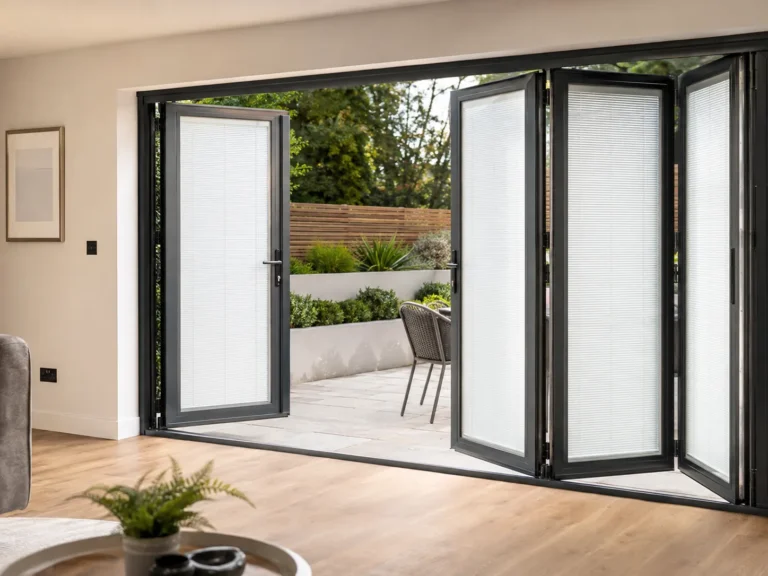
Folding Doors
Explore options around folding panels, handle positions and stack-back clearance.
View Bi-fold Door Blinds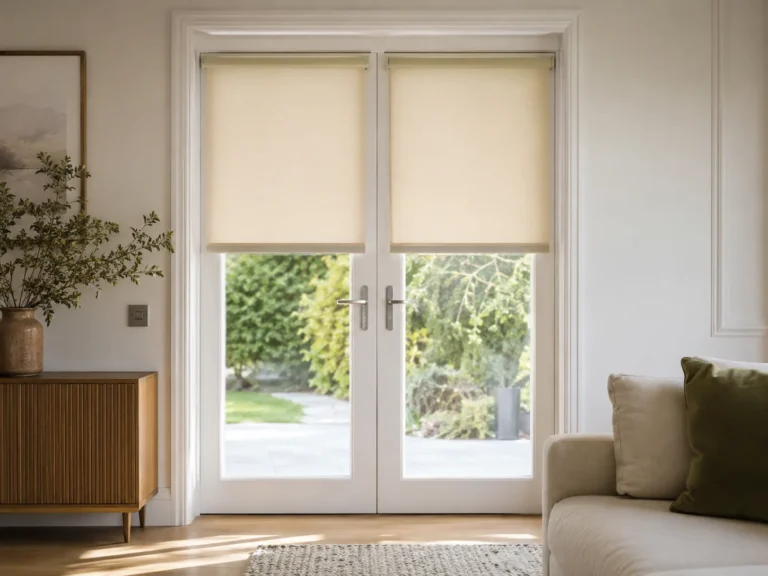
Paired Doors
Explore approaches around paired door movement, handles and individual glazed panels.
View French Door BlindsSliding Glazing
Explore solutions where wide glazing, sliding movement and usable access shape the decision.
View Patio Door Blinds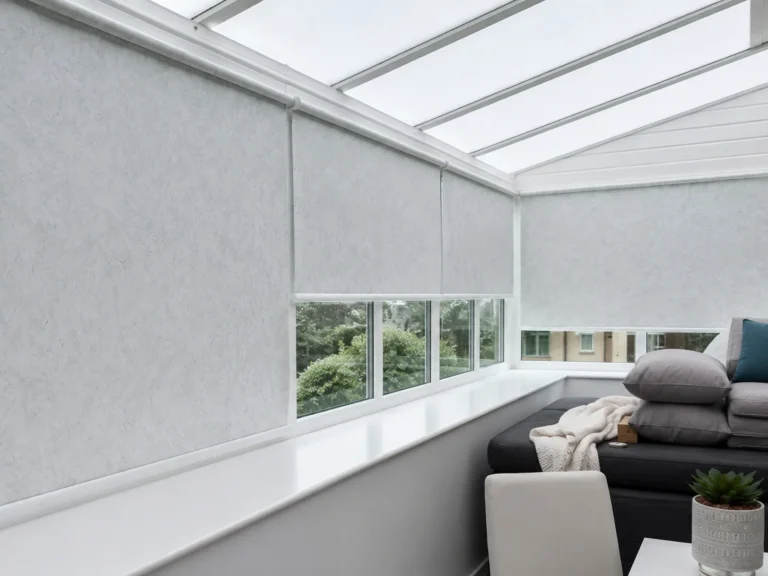
Glazed Rooms
Explore whole-room shading where several glazed elevations create combined daylight, glare and privacy needs.
View Conservatory Blinds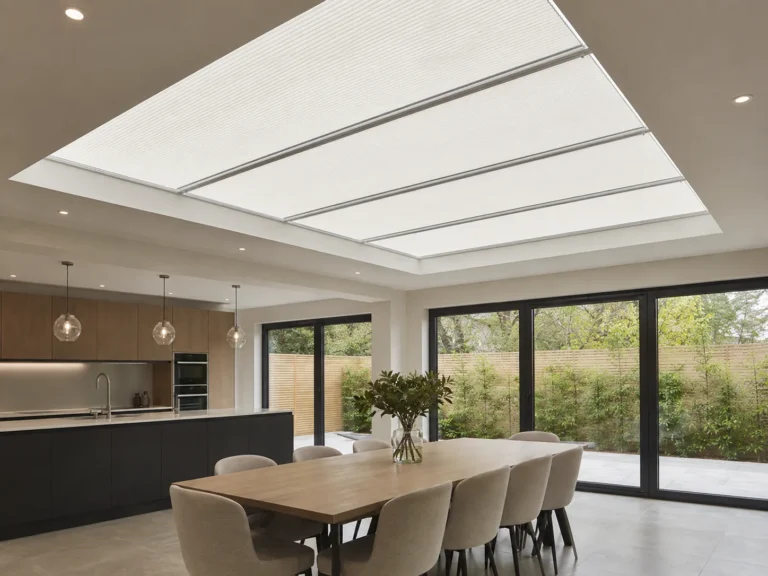
Overhead Glazing
Explore specialist shading where roof-lantern geometry, access and operation require a purpose-led solution.
View Roof Lantern BlindsSimple Routine Care
Gentle routine care is normally more useful than heavy cleaning, and the correct approach should reflect the selected fabric.
Regular light dusting can help prevent surface dust from building up on the fabric and surrounding components.
Where the selected fabric permits, deal with minor marks gently rather than soaking or aggressively scrubbing the material.
Do not assume every Roller fabric has the same moisture tolerance or can be cleaned with the same method.
If a Roller catches or operates unusually, check for obvious obstructions and seek advice rather than repeatedly forcing the mechanism.
What Changes the Specification?
A quotation reflects the actual window and chosen specification. These decisions commonly change what needs to be supplied rather than simply changing appearance.
The required level of daylight, privacy, dimout or blackout performance helps determine which suitable fabric route to consider.
Explore Blackout OptionsPowered control changes the operating system and should be chosen because it solves a real access or convenience need.
Explore Motorised BlindsA compatible Perfect Fit approach uses a different fitting method from a conventional Roller and depends on the actual glazing.
Explore Perfect Fit BlindsSize, number of blinds, recess conditions, handles and other practical details all influence the final Roller specification.
Ask About Your WindowsPractical Help from Start to Finish
Get help choosing around the actual opening rather than relying on a standard-size product or making fitting decisions without seeing the window.
Discuss the room, opening and priorities during a home appointment.
Relevant windows, doors and fitting conditions can be checked before the made-to-measure specification is finalised.
Get straightforward guidance on Roller fabrics, fitting approaches and operating choices according to what the room needs.
The chosen blinds are supplied to the agreed dimensions and specification rather than selected from generic standard sizes.
Noble Blinds professionally fits the blinds it supplies, so you do not need to arrange a separate installer.
Contact Noble Blinds after fitting if you need help with the supplied product.
Roller Blinds Across West Yorkshire
Choose your Area to continue to an eligible published Roller Blinds local page. The destinations are resolved from the current Roller relationship in Noble Blinds Core.
What Happens Next
The process keeps the important decisions in order so the blind can be chosen around the actual opening before supply and fitting.
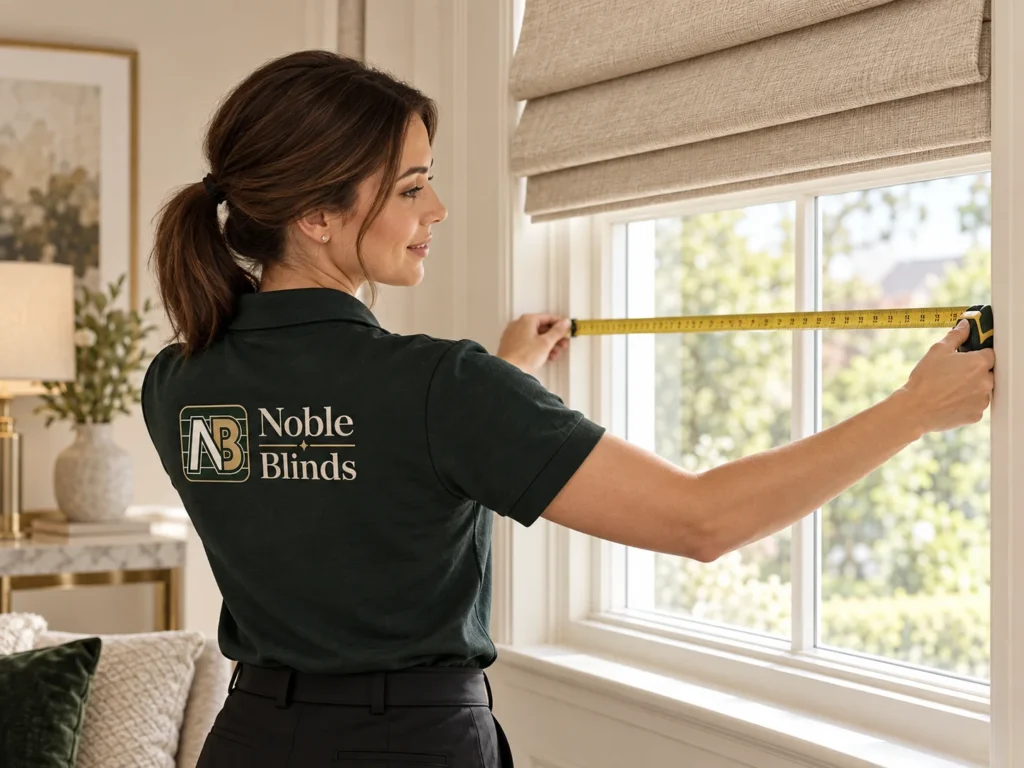
Contact Noble Blinds and arrange a home appointment at a suitable time.
The opening is measured and requirements for light, privacy, operation, fit and appearance can be discussed.
Suitable options are narrowed down and a quotation is prepared around the agreed made-to-measure specification.
The made-to-measure blinds are supplied and professionally fitted once the final order has been agreed.
Customer Feedback
Read genuine Google feedback about Noble Blinds service, advice, communication, measuring, professional fitting and the finished result.
Very nice and professional, paying attention to details and your wishes and make sure that everything is how would you like to be, high quality too. Highly recommended 💯
Great customer service quote and fitting are quick I’m really happy with my blinds they look stunning! Thank you again TikTok friend
Excellent service from start to finish. Good quality blinds friendly and efficient chap who knows his stuff. Fitted all mine today in no time. Would definitely recommend Luxury Blinds
Great service and amazing quality blinds all fitted very professionally plus very quick service. Thank you
Fast and efficient service, blinds look great and made room look new.
The person was great and love the blinds .thanks
Great service, fantastic job, great quality! Patient and understanding and I'm definitely recommending to family and friends. Thank you again!
Job well done and very friendly service, highly recommend this company
Great service, fantastic job. I’m very happy with the service definitely I’m gonna recommend my family and friends thank you.
Professional service provided and amazing quality blinds, would highly recommend. Thank you.
Practical Roller Blind Questions
These answers cover practical decisions that can remain after the main Roller blind options have been narrowed down.
Blackout fabric blocks light through the material, but light can still enter around the edges, frame or recess. If darkness matters, fitting position and overlap are as important as fabric choice; complete darkness should not be assumed.
One blind can give a cleaner look when the selected system suits the width and one control point is practical. Multiple blinds give independent operation and may be better where size, access or separate use makes one blind less convenient.
Several blinds can be planned to look coordinated, but separate openings can create small visual differences. A neat result depends on consistent fitting heights, proportions and clearances; exact fabric or bottom-edge alignment should not be promised without assessing the windows.
If a handle or lock projects into the blind line, the fitting position may need to move forward or outside the recess. The aim is to keep the fabric moving freely while retaining normal access to the window hardware.
On compatible framed glazing, a Perfect Fit Roller can stay close to the glass and move with the door, which can suit frequent use. Frame profile, glazing bead, handles and hinges still need checking because compatibility is not universal.
Where the selected system supports it, a double-Roller arrangement can serve two needs at one opening, such as softer daytime control and stronger light reduction. It adds complexity and space, so it is worthwhile only when both functions are useful.
Motorisation becomes more useful when a blind is high, difficult to reach, operated frequently or part of a group adjusted regularly. The motor, power source and controls still need to suit the final blind; smart features should never be assumed.
Roller Blinds generally suit a cleaner, more compact appearance, while Roman Blinds create a softer, more decorative fabric look. Choose around available space, desired finish and everyday operation rather than treating either style as universally better.
Vertical Blinds can be practical across very wide glazing because the louvres stack sideways and allow flexible access and light control. A Roller may still suit where the selected system can handle the opening and the preferred operation.
Privacy can change after dark because an illuminated room is easier to see into from outside. If night-time privacy matters, choose suitable opacity and close the blind fully rather than assuming daytime privacy performance will remain the same.
Home Appointment
Arrange a home appointment to discuss your windows, compare suitable Roller blind options and have the relevant openings professionally measured before deciding on the final specification.