
Window or Opening Type
A standard window, bay, glazed door, roof window or large area of glazing may each need a different approach.
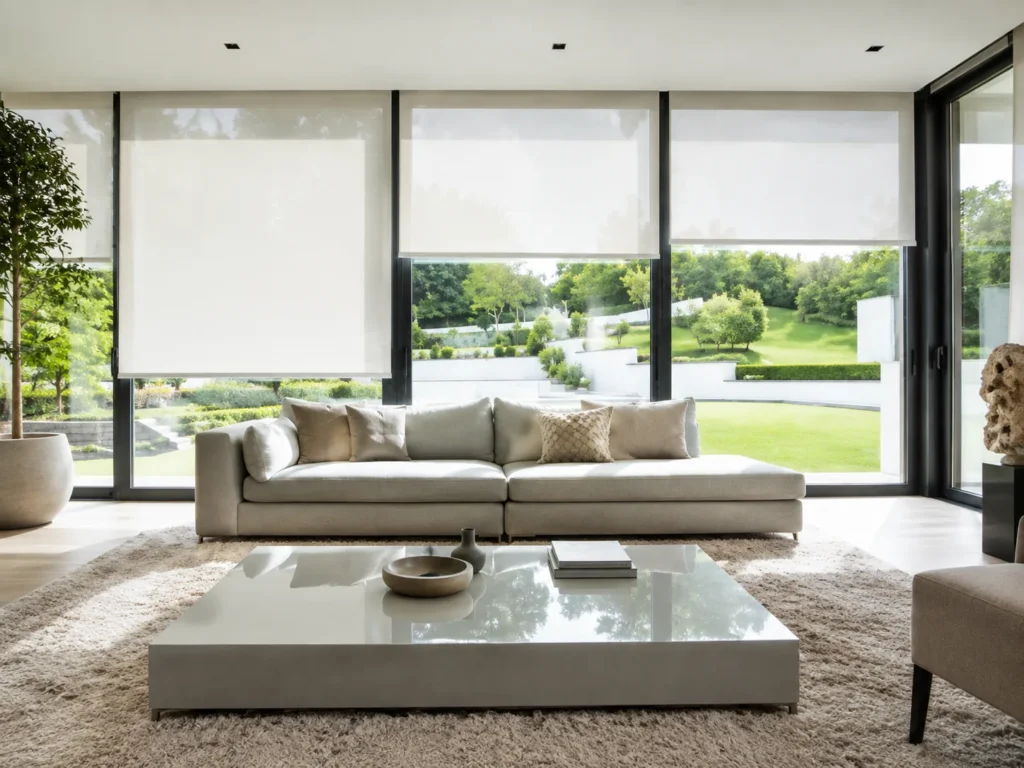
Noble Blinds serves Honley with made-to-measure options for windows, doors and specialist openings, supported by practical advice, accurate measuring.
Made Around Your Home
A good blind needs to suit the opening as well as the way you want the room to work.
Noble Blinds supplies made-to-measure window blinds in Honley, with the dimensions, fitting position and chosen style checked around the individual window or door. You can compare appropriate options at home before the final specification is agreed.
Windows and doors are measured so the blind can be specified around the actual opening rather than a standard size.
Compare appropriate styles according to privacy, daylight, room use, access and the way the window or door operates.
Your selected made-to-measure blinds are supplied and professionally installed for a neat, straightforward finish.
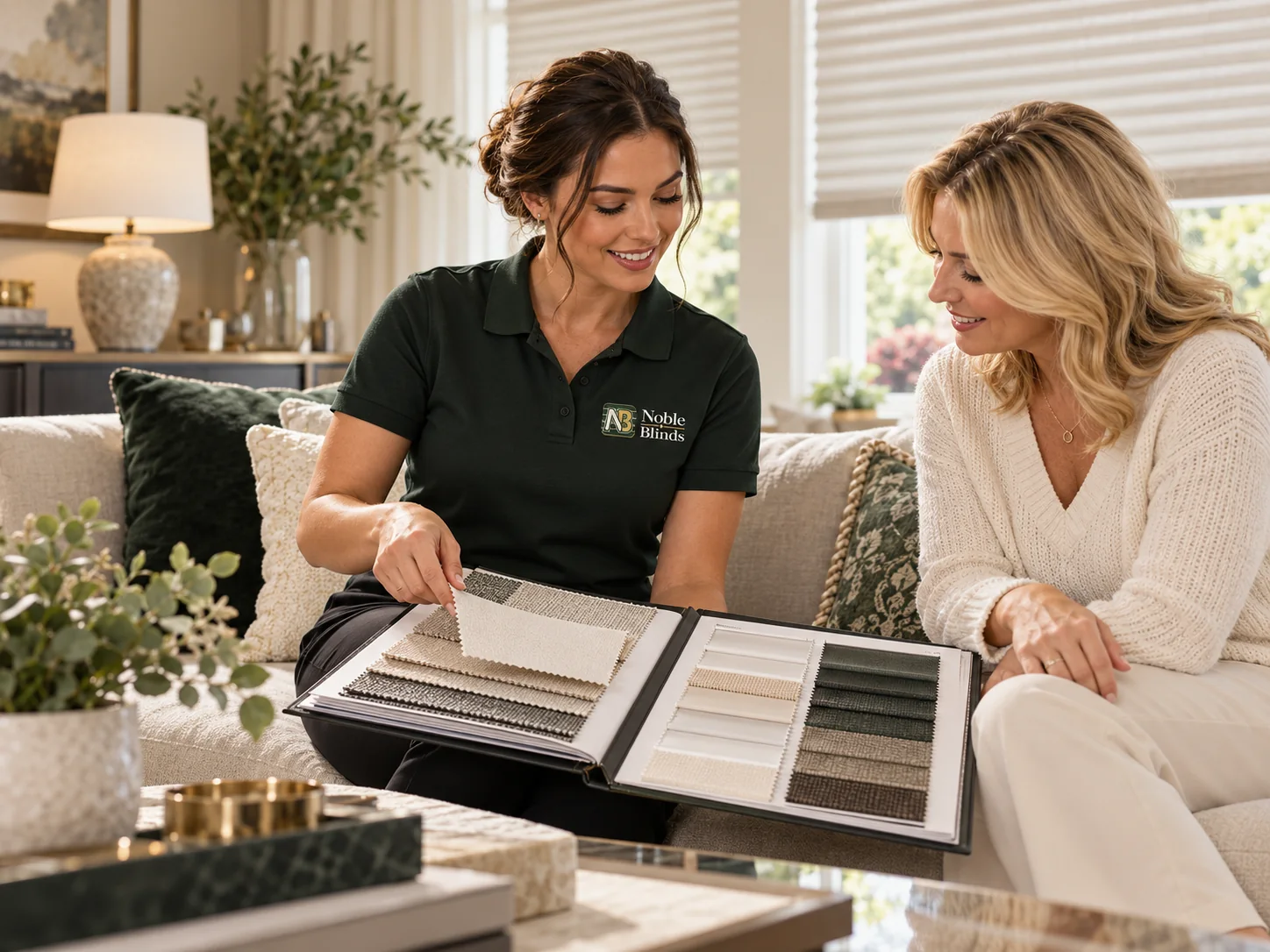
Start With the Practical Requirements
The right choice becomes easier when you start with what the opening and room actually need. Rather than choosing by appearance alone, check these four straightforward questions first.
A standard window, bay, glazed door, roof window or large area of glazing may each need a different approach.
Decide whether you want adjustable daytime privacy, softer daylight, glare control or stronger light reduction.
Think about where the blind will be used, including day-to-day access, moisture where relevant and how frequently the opening is used.
Manual operation may be ideal for easy-to-reach blinds, while motorisation can be useful on compatible high, large or difficult-to-reach openings.
Explore Your Options
Compare different styles according to the window, room, light control and look you want to achieve. These introductions are designed to help you identify a useful starting point. Detailed suitability can then be checked on the relevant product page or during measuring.
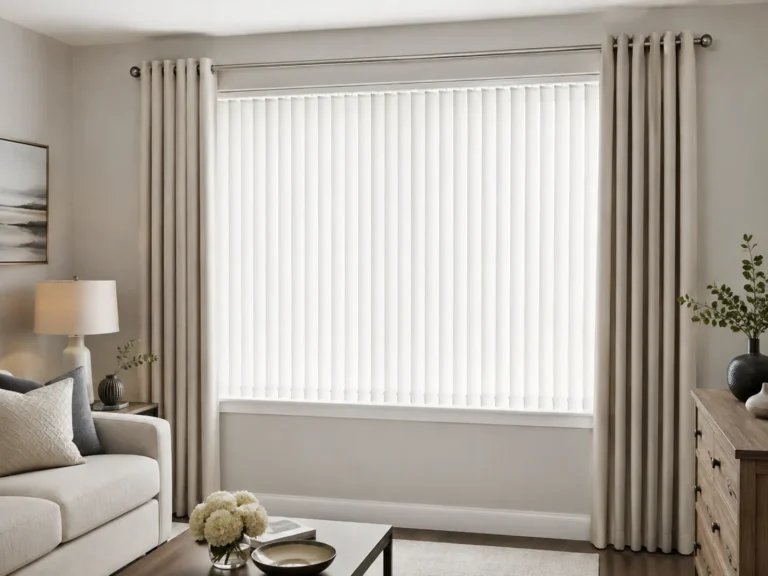
Adjustable vertical louvres make these a straightforward option for many wide windows and glazed openings, with flexible control over privacy and daylight.
View Vertical Blinds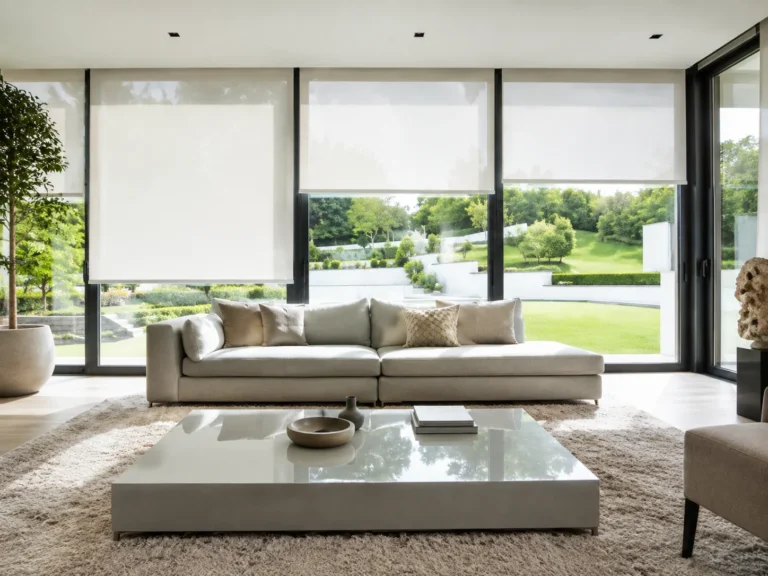
A simple, compact fabric blind with straightforward operation and a wide choice of looks and levels of light control.
View Roller Blinds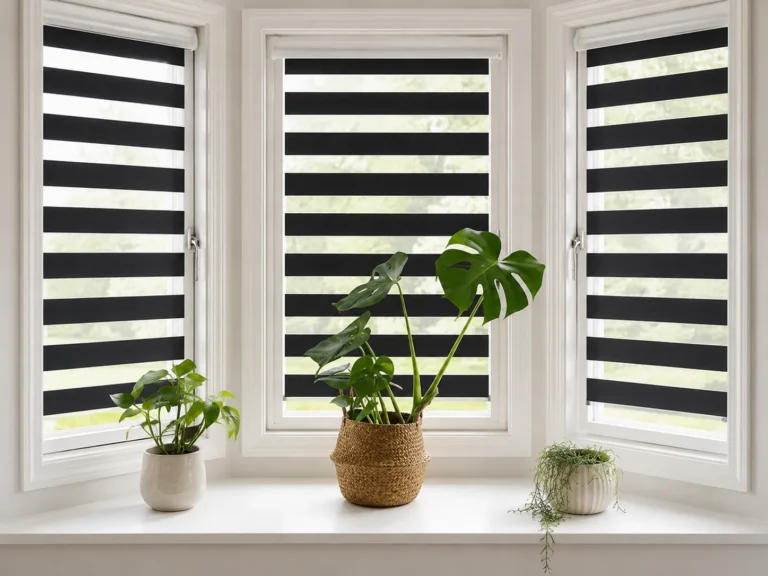
Layered sheer and opaque fabric sections allow the amount of visibility and incoming light to be adjusted during the day.
View Vision Blinds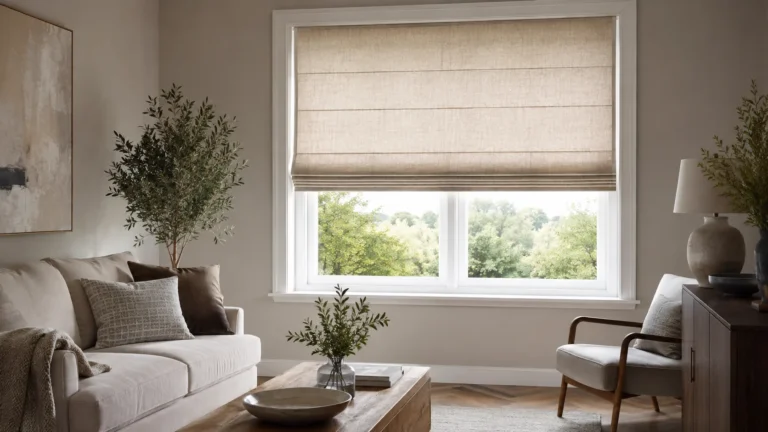
A softer fabric option that forms decorative folds when raised and can suit rooms where appearance is an important part of the decision.
View Roman Blinds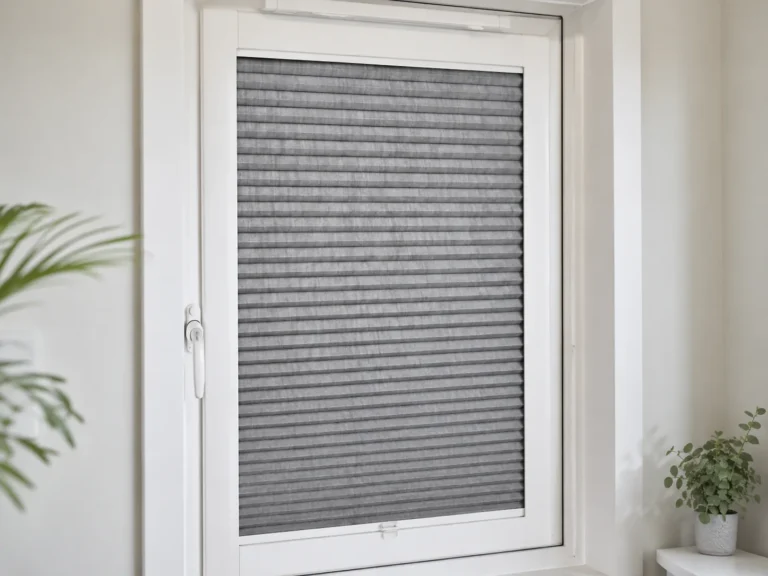
A close-to-glass frame-mounted option for compatible windows and doors, helping keep the blind neat when the opening is used regularly.
View Perfect Fit Blinds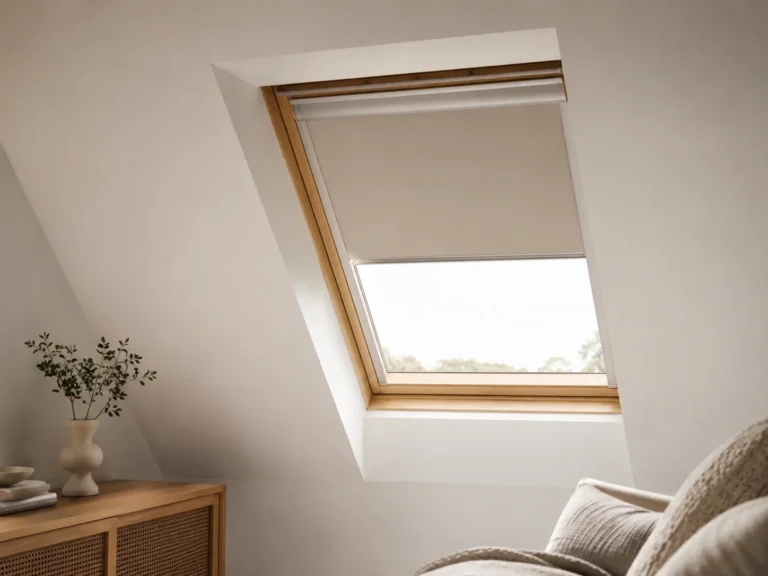
Purpose-designed options for compatible VELUX roof windows, where the blind needs to work correctly with angled glazing.
View VELUX Blinds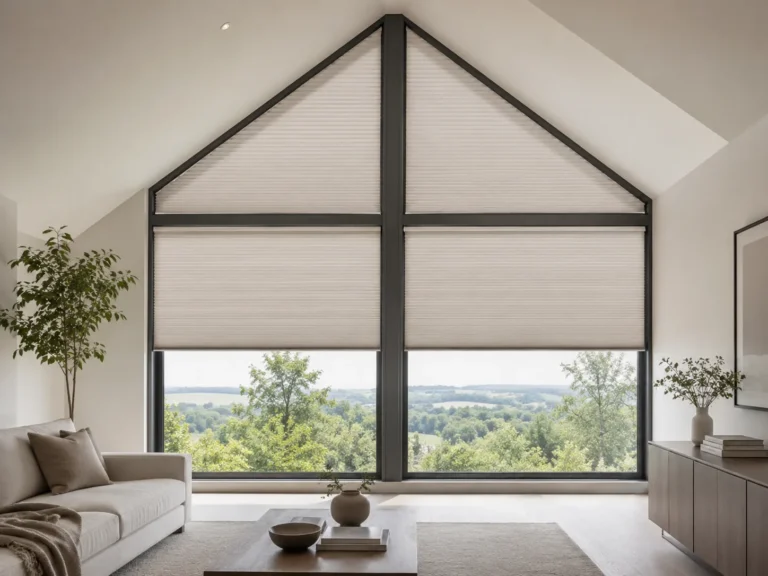
Lightweight pleated fabric creates a compact blind that can be useful where space, glazing shape or a neat stack matters.
View Pleated Blinds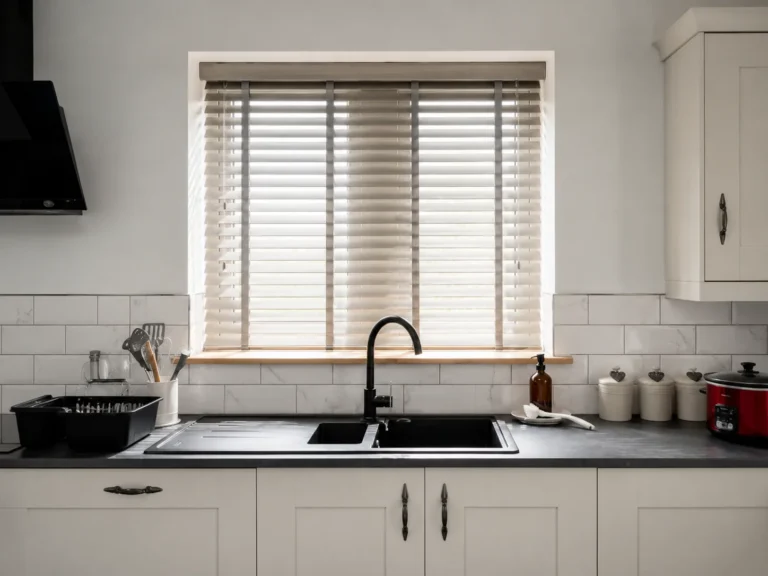
Horizontal slats can be tilted for precise adjustment of views, privacy and daylight without always raising the complete blind.
View Venetian Blinds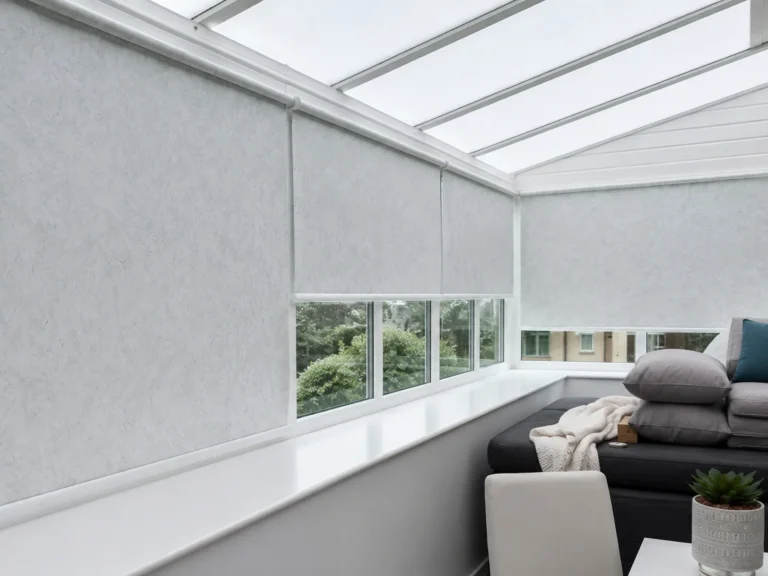
A conservatory may need different solutions across roof glazing, side windows and doors, depending on access and light-control requirements.
View Conservatory Blinds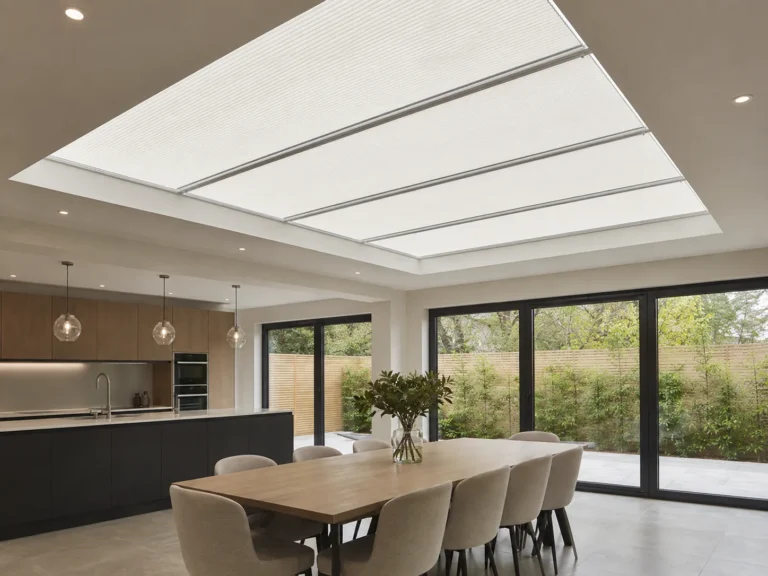
Designed for overhead glazed openings where normal window blinds may not provide straightforward operation or controlled positioning.
View Roof Lantern Blinds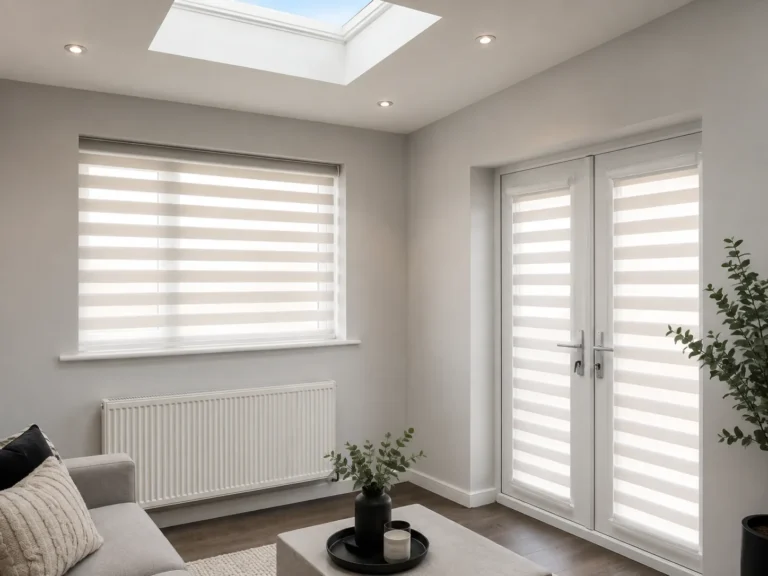
Blind choices for glazed doors need to account for handles, hinges, access and the way the door moves during day-to-day use.
View Door Blinds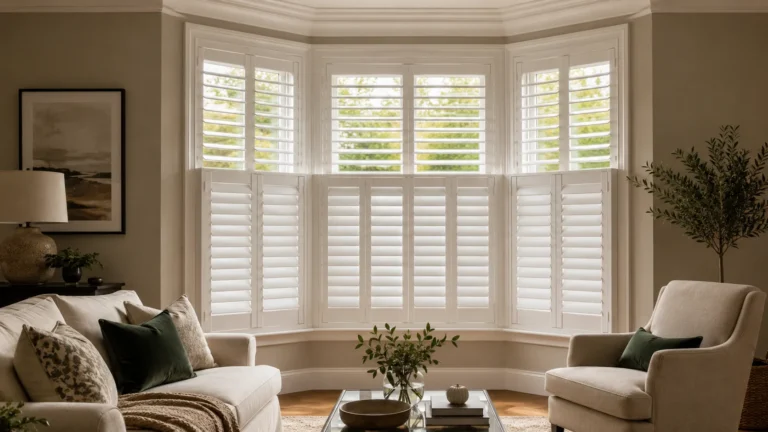
Framed adjustable louvres provide a more permanent window treatment with flexible control over views and incoming daylight.
View Window ShuttersSolutions for Particular Requirements
Some windows or customer needs are better approached by the problem being solved rather than by starting with a general blind style. Explore specialist options for unusual openings, stronger light control, easier operation and other specific requirements.
Plan separate blind sections around the angles of the bay so neighbouring blinds can operate without clashing.
Explore Bay Window BlindsFor stronger light reduction, check both an opaque material and the fitting method because edge gaps can affect the finished result.
Explore Blackout BlindsPowered operation can be useful for compatible large, high or hard-to-reach blinds where manual adjustment would be inconvenient.
Explore Motorised BlindsAngled roof glazing often needs a purpose-designed system that remains controlled against the window rather than hanging vertically.
Explore Skylight BlindsAlternating sheer and opaque fabric sections provide adjustable daytime privacy and flexible control over incoming light.
Explore Day & Night BlindsHorizontal wood or wood-effect slats provide adjustable light control with a warmer and more substantial visual finish.
Explore Wooden BlindsPractical Options for Glazed Doors
Door blinds must provide the required privacy and light control without making the door awkward to use. The way the panels open, where the handles sit and how much clear space is available can all affect which solution is straightforward.
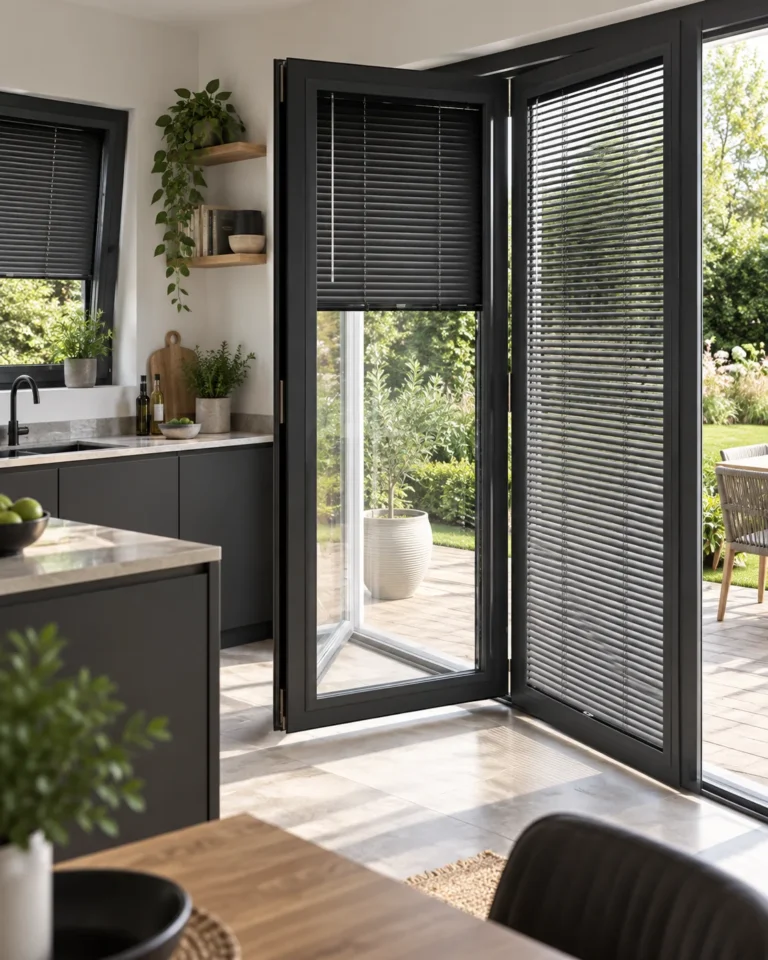
The blind arrangement needs to allow folding panels, handles and the stacked doors to move through their normal positions without obstruction.
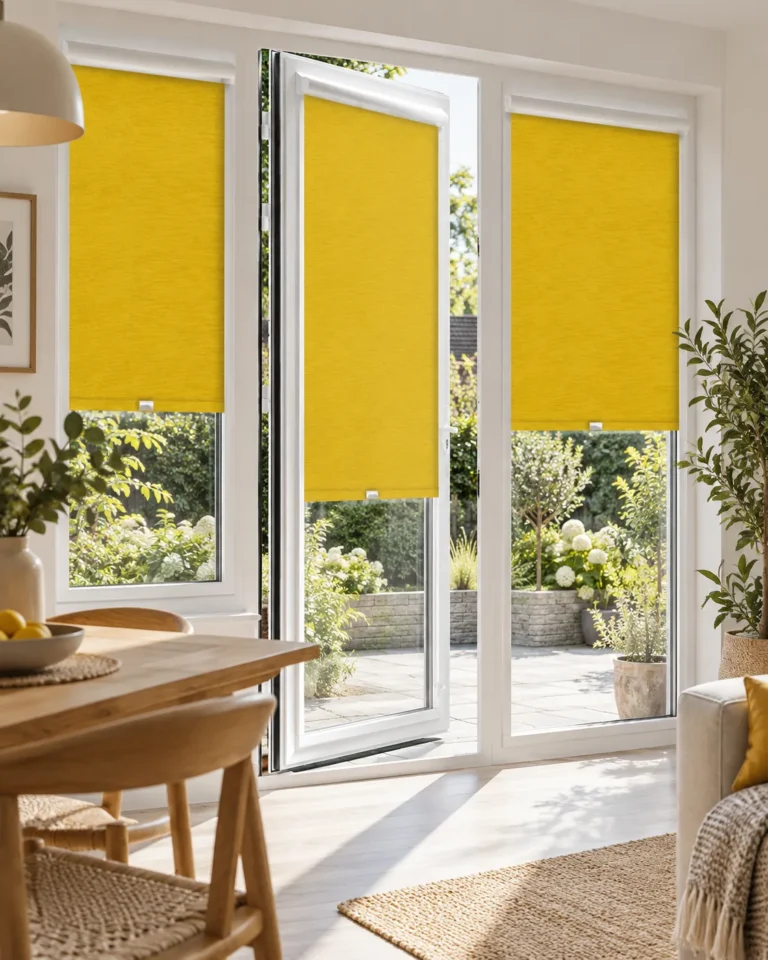
Check handle and lock access, hinge movement and whether the blind should move with the individual door or sit separately from it.
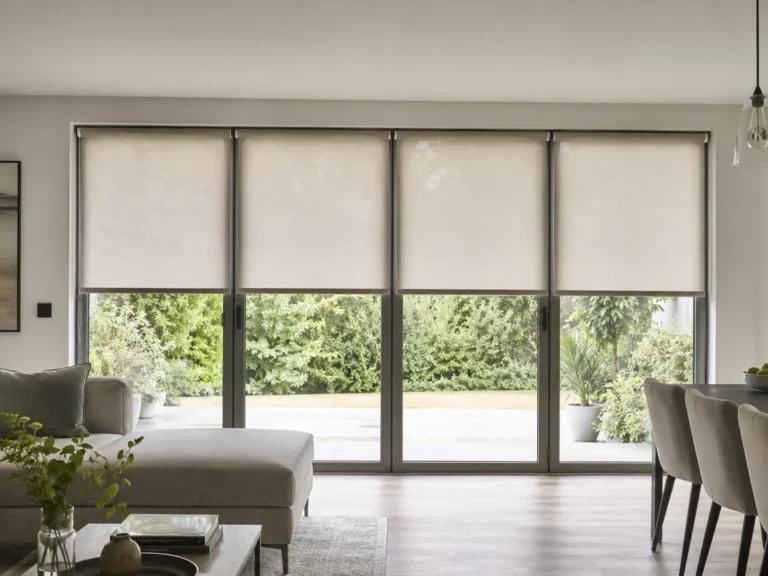
Large glazed doors may suit side-stacking, compact or compatible frame-mounted blinds depending on the width and frequency of access.
Match the Blind to the Room
The same blind does not need to be used throughout the home. Start with what each room needs to do well. Privacy, daylight, glare, cleaning and the way the window is used can make different choices more straightforward in different spaces.
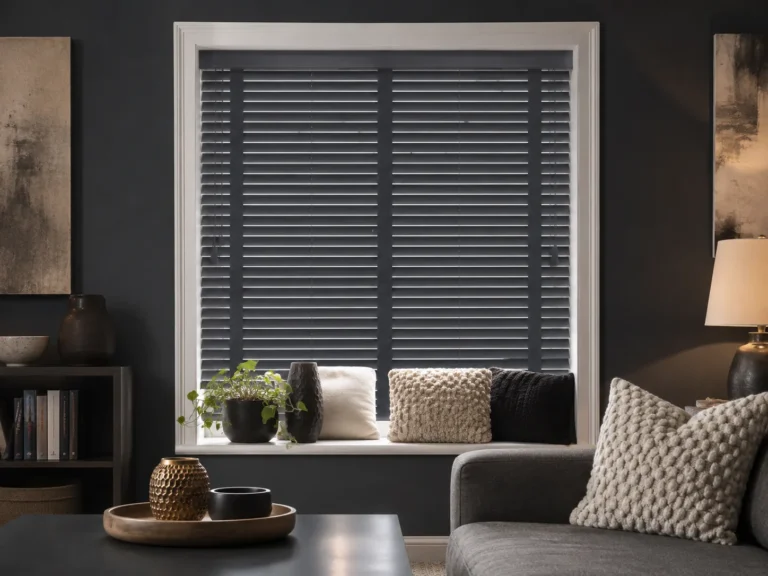
Flexible privacy and daylight are often more useful than maximum darkness. Adjustable slats, louvres or layered fabrics may be worth checking.
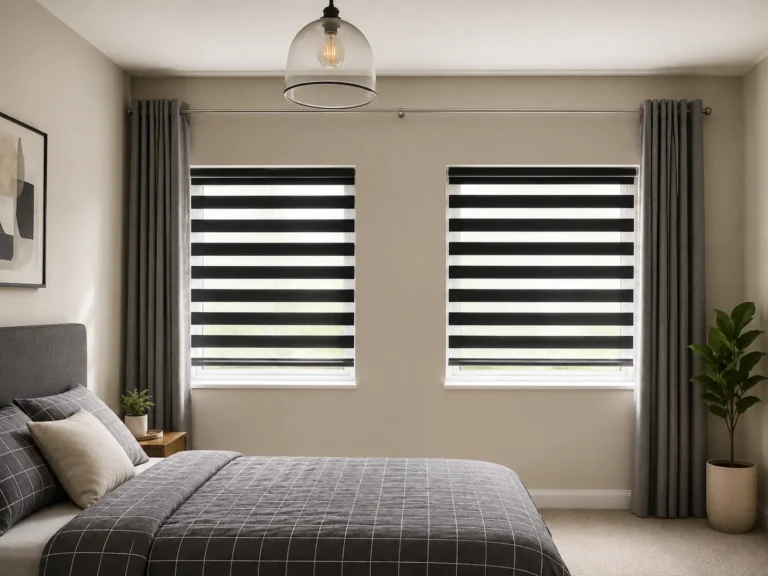
Stronger light reduction may be the priority. If blackout performance matters, check the blind material together with edge gaps and fitting position.
Select around day-to-day use, cleaning and the position of the blind in relation to the working area, window and nearby sources of moisture.
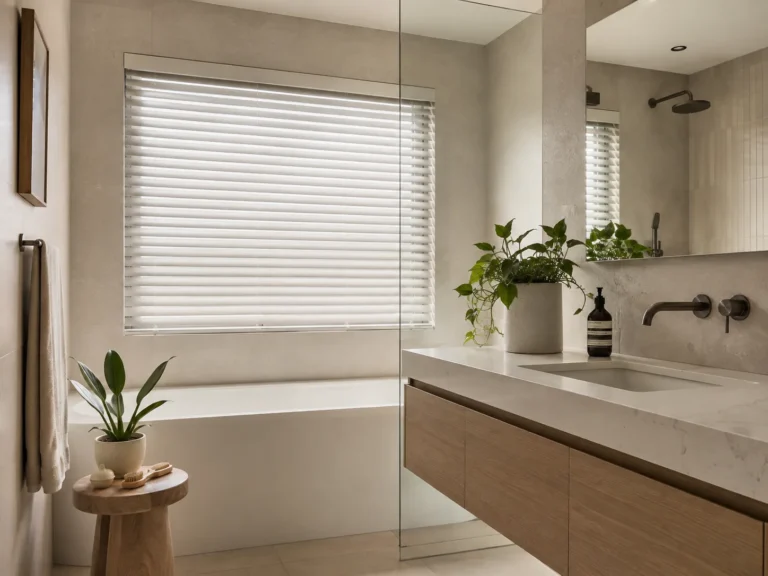
Privacy is usually important, but the chosen material and system should also be appropriate for the room conditions.
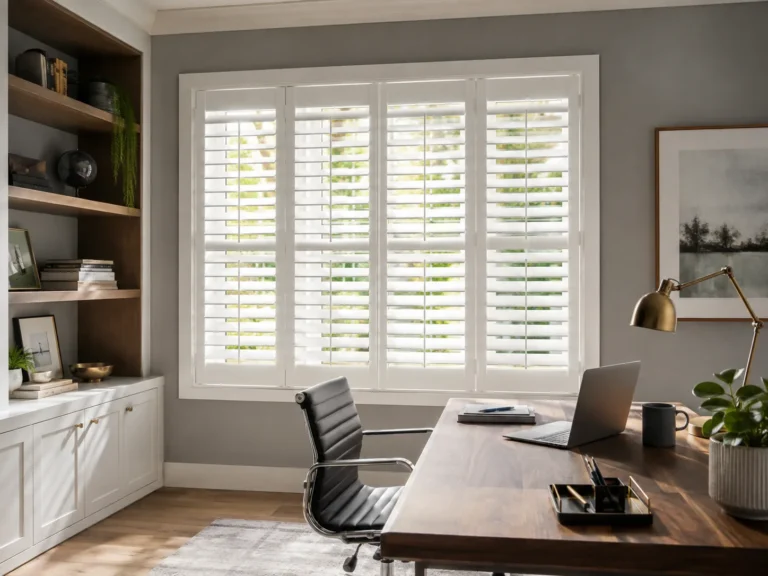
Adjustable glare control can help manage strong light on screens without necessarily making the whole room dark.
Before You Choose
A few straightforward checks can quickly narrow a large range down to options that genuinely suit the opening. Use these checkations before deciding on fabric, colour or finish.
01
Decide whether you need adjustable privacy, glare reduction, softly filtered daylight or stronger darkness.
02
The dimensions, shape and movement of the window or door can rule some fitting methods in or out.
03
Check how the room is used and whether factors such as moisture, frequent access or strong daylight affect the choice.
04
Think about how often the blind will be adjusted and whether manual or compatible motorised operation is more straightforward.
Advice Before You Decide
You do not need to know the exact blind type before getting in touch. Start with.
A visit to your property allows the opening to be measured and the practical requirements discussed before the final blind and specification are agreed. Where more than one style could work, the differences in operation, fit and light.
Explain the window, door or room and what you want the blind to achieve. Where more than one style could.
Relevant dimensions, handles and clearances can be checked before the final specification. That makes it easier to compare.
Once the preferred solution is clear, a quotation can be prepared for the proposed made-to-measure blinds.
Once ready, the selected blinds are supplied and professionally fitted, with normal.
Tell us about the windows, doors or rooms you would like help with. That makes it easier to compare realistic options around the actual.
Start With the Opening
The shape, size and movement of the opening can be just as important as the appearance of the blind. These common situations show why measuring and choosing the fitting approach should come before the final specification.
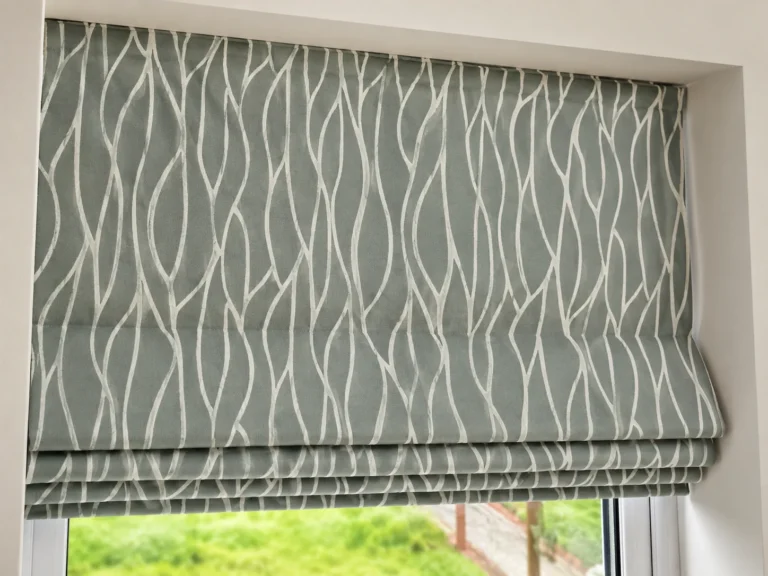
Most familiar blind styles can be checked, with the final choice shaped by recess depth, handles, privacy and the way the window opens.
Width and finished blind weight matter. Vertical, appropriate Roller, Day & Night or motorised systems may be checked depending on the opening.
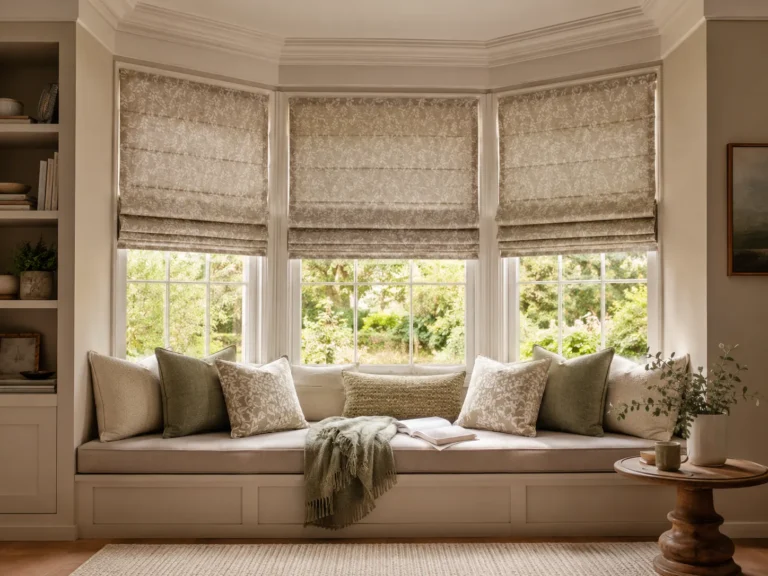
Each face of the bay normally needs to be planned so individual blinds meet neatly without clashing at the corners.
Handles, hinges, locks and door movement can determine whether a frame-mounted, side-stacking or separate blind is the better approach.
Angled glazing needs a compatible blind that stays positioned correctly against the window and remains straightforward to operate.
Roof glazing, side windows and doors may need different blind types rather than forcing one system across every opening.
Accurate Measuring
Made-to-measure blinds depend on the usable fitting space, not only a single width and drop.
Handles, vents, recess depth, trim and opening movement can all reduce the space available to the blind. Checking these details before ordering helps establish a fitting position that works with the window or door. The measuring stage also helps establish whether the blind should sit inside the recess, outside it or within a compatible frame-mounted system. Where several openings appear similar, each one can still differ slightly in width, drop or squareness and should be checked individually. Where several openings appear similar, each one can still differ slightly in width, drop or squareness and should be checked individually.
Arrange a Free Measure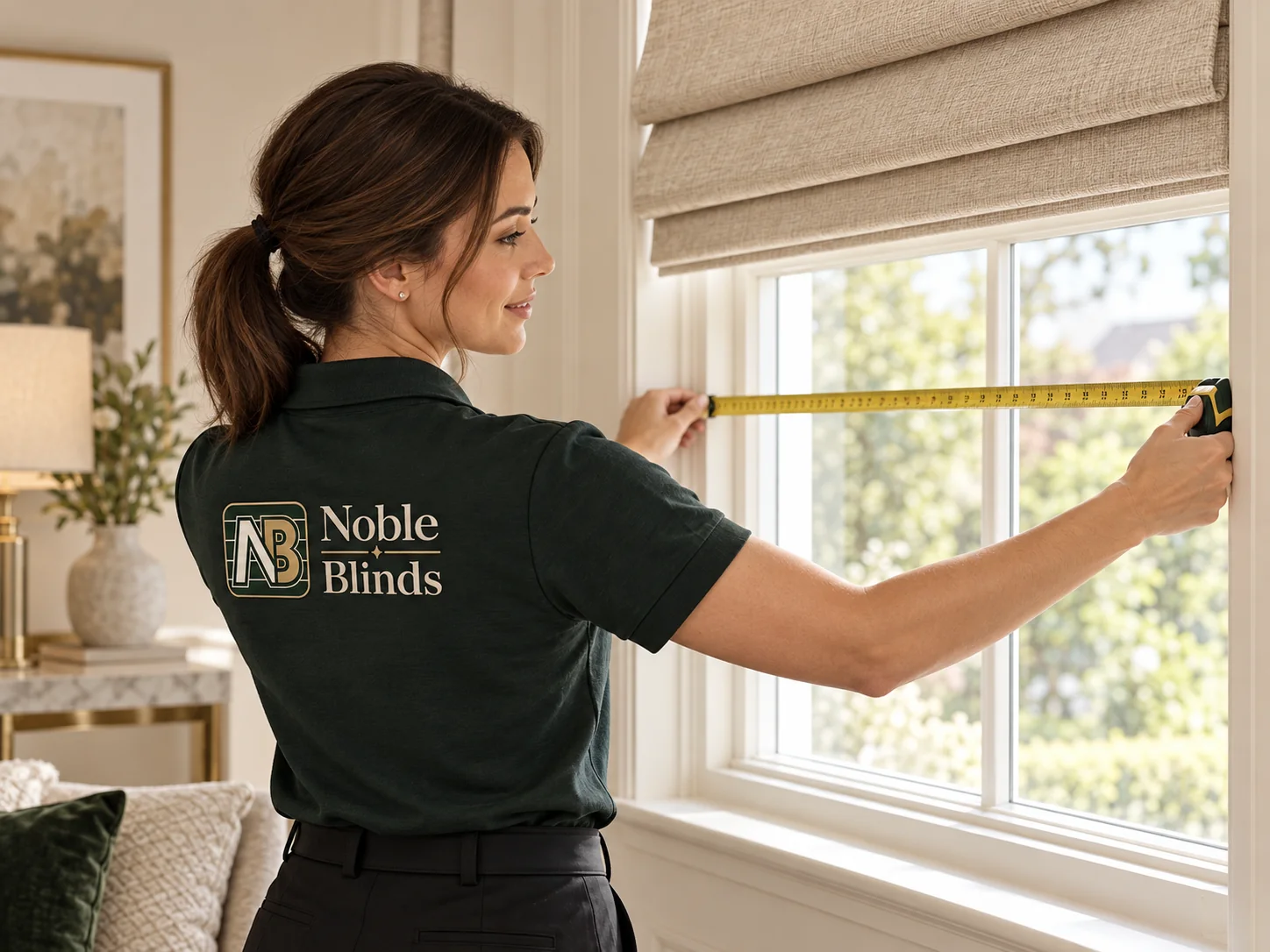
How the Service Works
The process keeps selection, measuring, quotation and fitting in a sensible order so the final blind is based on the actual opening and agreed requirements. Any compatibility questions can therefore be dealt.
Tell Noble Blinds about the opening, room and main requirements.
Check dimensions and clearances at the property while comparing suitable styles, fabrics and operating options.
Agree the preferred made-to-measure specification and receive a quotation based on the proposed solution.
Once ready, the selected blinds are supplied and professionally fitted, with normal.
Why Noble Blinds
The service is designed to make the fitting and product decisions clearer, with measuring, practical advice and professional installation forming part of the same customer journey. This allows the final recommendation to remain.
Compare options around the opening, room and required light control instead of assuming one blind style suits every situation.
Dimensions and clearances are checked at the property so the proposed blind is based on the usable fitting space. The service is intended to make the.
The selected blind is specified around the actual opening and agreed requirements rather.
Noble Blinds professionally fits the made-to-measure blinds it supplies and checks normal operation.
Customer Feedback
Read genuine customer feedback about the experience of dealing with Noble Blinds and the business previously known as Luxury Blinds LTD. Area pages should not turn general reviews into invented local testimonials, so the feedback remains linked to the business as a.
Very nice and professional, paying attention to details and your wishes and make sure that everything is how would you like to be, high quality too. Highly recommended 💯
Great customer service quote and fitting are quick I’m really happy with my blinds they look stunning! Thank you again TikTok friend
Excellent service from start to finish. Good quality blinds friendly and efficient chap who knows his stuff. Fitted all mine today in no time. Would definitely recommend Luxury Blinds
Great service and amazing quality blinds all fitted very professionally plus very quick service. Thank you
Fast and efficient service, blinds look great and made room look new.
The person was great and love the blinds .thanks
Great service, fantastic job, great quality! Patient and understanding and I'm definitely recommending to family and friends. Thank you again!
Job well done and very friendly service, highly recommend this company
Great service, fantastic job. I’m very happy with the service definitely I’m gonna recommend my family and friends thank you.
Professional service provided and amazing quality blinds, would highly recommend. Thank you.
Common Questions
Useful answers to common questions about measuring, fitting, privacy, light control and different types of opening. Measuring the actual window.
Width, operating weight, fixing space and how independently you want sections controlled should all be considered. In some cases one blind works well; in others several blinds may be more practical. The exact answer can depend on the opening, the selected blind and the way the room is used, so compatibility should be checked rather than assumed. Measuring the actual window or door provides the best basis for deciding which fitting approach is.
Yes, where the chosen blind and window support an appropriate motorised system. Powered control can reduce the need to reach manual controls on elevated or awkward openings. Control options vary between systems, so remote, wall, app or grouped operation should only be assumed where the selected product supports it. Motorisation is most useful when it solves a genuine access or convenience problem, not simply because powered operation is available.
Start with the level of privacy required, then compare materials and systems appropriate to the room conditions. Adjustable options can be useful where you also want to retain daylight. A material that works well in a dry bedroom may not be the best choice where moisture exposure is more regular. Privacy can still be balanced with daylight by comparing appropriate adjustable systems for the conditions.
Yes, separate blinds can allow individual sections to be adjusted independently. The arrangement still needs to be planned as one bay so the blinds fit and operate neatly together. The meeting points at the angles are usually the critical areas because several headrails or fabrics may compete for the same space. Individual control can still be retained while keeping the overall arrangement coordinated across the bay.
Useful measuring also checks recess depth, handles, vents, opening movement and clearances around the proposed blind. These details can determine whether an inside- or outside-recess position is more practical. The blind also needs to remain convenient when the door is opened repeatedly, so clearance should be checked in every normal position. A system that covers the glass well is not useful if it obstructs access, so movement and clearance need equal attention.
Yes. Comparing several realistic options is often more useful than choosing from photographs alone. The opening, room and required privacy or light control can guide the shortlist. A made-to-measure specification can then be based on the usable space and the result you want from the room. The exact answer can depend on the opening, the selected blind and the way the room is used, so compatibility should be checked rather than assumed.
Yes. The dimensions, recess space and relevant clearances should be checked for the actual opening before the blind is specified. This helps the finished blind work with the window or door rather than relying on a standard size. Measurements should reflect the proposed fitting position, because an inside-recess blind and an outside-recess blind are not specified from the same usable space.
Yes. Tilting slats, rotating louvres or layered fabrics can reduce direct views while allowing some natural light to remain. The right system depends on the window, room and how much view-through you want. Where several systems could work, compare how each one handles privacy, daylight, access and day-to-day operation before deciding. Measuring the actual window or door provides the best basis for deciding which fitting approach is realistic.
For a bedroom, consider both the material and the complete fitting arrangement. Stronger light reduction may be available, but the best result comes from choosing a suitable blind and understanding where light can still enter around it. A deeper recess or different fitting position can change where edge light remains, so the opening should be assessed before expectations are set. The fitting position matters because opaque fabric does not remove the small gaps that can remain around a blind.
Frequent access makes clearance and easy operation especially important. The blind should work with the door rather than needing to be moved out of the way every time the opening is used. Where several door panels move independently, each section should be considered as part of the complete opening rather than measured in isolation. Frame depth and the location of locks or handles can make one fitting method more practical than another. A system that covers the glass well is not useful if it obstructs access, so movement and clearance need equal attention.
Ready to Discuss Your Windows?
Tell Noble Blinds about the windows, doors or rooms you would like help with. You can enquire before you have decided on the exact blind type. You do not need final measurements or a confirmed product choice.